
5 Best Carving Knife for Turkey In 2026
The turkey is roasted. The table is set. And then you realize you don’t have the right knife to slice it. This happens to more people than you’d think. A dull or unsuitable knife can turn a beautiful turkey into a shredded mess, and it makes the whole carving process frustrating instead of satisfying.
The good news? Finding the best carving knife for turkey doesn’t have to be complicated. You just need to know what to look for and which options actually deliver on their promises.
I’ve tested and researched five knives that excel at slicing turkey and other meats. Some are budget-friendly. Others are premium options that’ll last decades. This roundup will help you understand which knife works best for your needs, your kitchen, and your budget.
What Makes a Great Turkey Carving Knife?
Before jumping into the products, let’s talk about what separates a good carving knife from a mediocre one.
A proper carving knife has a long, thin blade. This design lets you make long, smooth cuts through the meat without tearing or shredding. The blade should be sharp—genuinely sharp—because dull knives actually require more force and create ragged cuts.
The length matters. Most quality turkey carving knives run between 8 and 12 inches. A 12-inch blade gives you the reach to make one continuous cut down the turkey breast. An 8-inch knife works fine too. It just means more cuts to accomplish the same thing.
The handle should feel comfortable in your grip. Your hand gets tired when carving a whole bird. A knife that fits your palm well makes the job easier and less tiring. A full tang handle—where the metal extends all the way through—adds durability and balance.
Material counts too. German stainless steel is a popular choice because it holds an edge well while still being forgiving. Some knives use high-carbon stainless steel, which balances sharpness with rust resistance. Japanese-style high-carbon steel can get extremely sharp but requires more care.
A good carving knife should slice cleanly through skin, muscle, and bone. It should feel balanced in your hand, not too heavy and not too light. And honestly, it should make you feel confident. A quality knife changes your entire cooking experience.
Cutluxe Brisket Knife – 12″ Carving & Slicing Knife
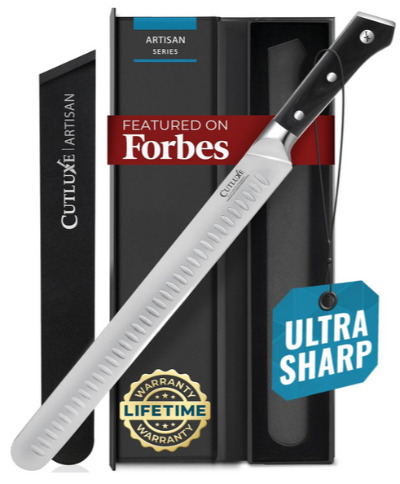
The Cutluxe comes in at 12 inches long, which puts it on the premium side for carving knives. This is a serious blade designed for people who want one knife that handles multiple jobs.
What You Get
You get the knife itself, a protective leather sheath, and a box that looks nice enough to give as a gift. The blade is German steel, hand-finished, and the handle is ergonomically designed. The full tang design means the steel runs through the entire handle, making it one solid piece.
Best Use Cases
The Cutluxe shines when you’re carving whole birds or slicing large roasts. At 12 inches, it covers a lot of distance with each stroke. This knife works for brisket (hence the name), turkey, ham, and other proteins that benefit from long, smooth slicing motions.
It’s also a good all-around meat slicer if you do a lot of cooking. Some people use it for slicing vegetables too, though it’s really built for proteins.
Key Features Explained
The German steel blade holds an edge incredibly well. German steel is known for being tough—it won’t chip easily if you accidentally hit bone. The downside is it doesn’t get quite as sharp as some Japanese steels, but most home cooks prefer this tradeoff.
The ergonomic handle is curved slightly to fit your palm. The full tang design means there’s no separation between blade and handle. Some people love this. Others find full tang knives a bit heavy.
The 12-inch length is substantial. It’s not quite a sword, but it’s definitely bigger than a standard kitchen knife. This takes getting used to, but once you adapt, you’ll appreciate the reach.
Real-Life Usage Insight
When you hold this knife, you feel the quality. It’s not feather-light, but it’s not clumsy either. The weight is distributed well across the blade and handle. Carving a turkey with a 12-inch blade is genuinely different from an 8-inch knife. You can cut from the shoulder to the thigh in one motion, which is satisfying.
The edge stays sharp through multiple use. After carving a turkey and some roast beef, it still cuts cleanly without requiring much pressure. That matters because a knife that forces you to press hard will slip and cause accidents.
The sheath is a nice touch. Leather sheaths protect the blade and make storage safer. It’s the kind of detail that shows the maker cares about the whole experience.
Honest Pros and Cons
Pros:
- Extremely sharp out of the box
- Holds an edge for a long time
- The 12-inch length covers serious ground
- Full tang construction is durable
- Feels expensive and well-made
- Includes a protective sheath
- Works beautifully for slicing roasts, turkey, and brisket
Cons:
- The price is higher than average
- The weight might feel heavy if you’re not used to it
- The size is intimidating for beginners
- Takes more storage space
- Might be overkill if you only carve once a year
- Requires proper honing to keep the edge sharp long-term
Performance Discussion
In real use, the Cutluxe performs like a premium knife should. The blade cuts smoothly through turkey skin and muscle. The handle doesn’t slip even when your hands are a bit moist. The balance point is somewhere near the blade, which takes some adjustment if you’re used to lighter knives.
The sharpness is the main selling point. This knife performs better than knives twice its price, and that’s saying something. It carves cleanly without tearing, which is exactly what you want.
Ease of Use
Beginners might find the 12-inch length intimidating. It’s not hard to use, but it requires more control than a shorter blade. If you’re comfortable in the kitchen, it’s easy. If you rarely cook, you might prefer something smaller.
The handle shape is forgiving. Your hand settles into it naturally. The weight is substantial but not unwieldy.
Value for Money
For the price, this is a legitimate investment. You’re not paying for a brand name with no substance. You’re paying for a well-made, sharp blade that’ll outlast most competitors. If you carve meat regularly, this pays for itself in satisfaction alone.
If you only carve turkey once a year, it’s a luxury. But it’s a luxury you’ll appreciate every single time you use it.
WIZEKA 8-Inch Turkey Carving Knife Set (2 PCS)
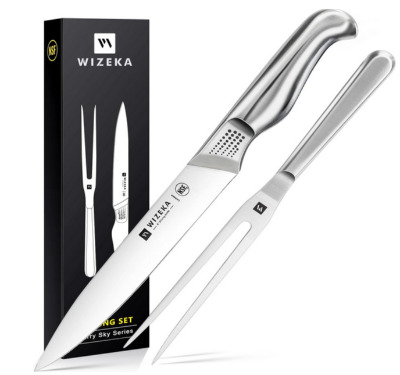
The WIZEKA set comes with two knives—a carving knife and a carving fork. The carving fork is actually useful. It holds the turkey steady while you slice. This set approach appeals to people who want everything they need in one package.
What You Get
Two knives are the headline. The set includes a carving knife, a carving fork, and they come in a nice gift box. The blades are stainless steel, and the handles are ergonomic. This is a complete carving kit right out of the box.
Best Use Cases
The WIZEKA works perfectly for turkey carving. The 8-inch blade is sized just right for medium to large birds. The carving fork is the real MVP here—it lets you hold the turkey steady while you work, which is exactly what you need.
This set is ideal if you’re starting fresh. You get both pieces you actually use, so nothing is wasted. It’s also good for people who don’t have much kitchen storage.
Key Features Explained
The stainless steel blade is sharp and relatively easy to maintain. Stainless steel isn’t as dramatic as German or Japanese steel, but it’s dependable. You won’t spend hours worrying about rust.
The 8-inch length is manageable. It’s not too long, not too short. Most people can control it easily without strain. This blade length is honestly ideal for beginners.
The fork has curved tines, which grip the turkey better than straight tines. This design detail matters. A bad fork will slip and frustrate you. A good fork locks in and holds firm.
The handles on both pieces are designed to be ergonomic. That’s a buzzword, but in this case, it means the shape feels comfortable during extended carving sessions.
Real-Life Usage Insight
The fork is genuinely helpful. Holding a hot turkey steady while slicing is annoying without one. The tines dig in without piercing so deep that they ruin the meat. The handle is long enough that your hands stay away from the hot bird.
The knife itself is sharp enough for the job. It cuts through turkey skin cleanly and slices meat without dragging. It’s not going to amaze you with surgical precision, but it does exactly what you need it to do.
Together, these two pieces work as a team. You’re not juggling the turkey with one hand while trying to slice with the other. You can focus on making clean cuts.
Honest Pros and Cons
Pros:
- Includes a carving fork (actually useful)
- 8-inch blade is easy to control
- Reasonably sharp out of the box
- Stainless steel is low-maintenance
- Comes in a gift box for giving
- Affordable price point
- Good for beginners
Cons:
- Not as sharp as premium options
- Stainless steel doesn’t hold an edge quite as long
- The blade might slip if your hands are very wet
- Quality is decent but not exceptional
- Won’t feel like a luxury product
- The fork is useful but won’t last forever
Performance Discussion
The WIZEKA performs the basic job really well. You can carve a complete turkey without frustration. The blade doesn’t drag through meat. The fork keeps the bird from moving around.
The sharpness is adequate rather than outstanding. It cuts, and it cuts cleanly, but you’ll notice the difference if you’ve used a premium knife. This is fine. Most home cooks never need better than “adequate.”
After carving, the blade stays reasonably sharp for other tasks. You probably won’t sharpen it as frequently as you’d sharpen a cheaper blade, but you’ll sharpen it more often than a premium option.
Ease of Use
This is the most beginner-friendly option on this list. The 8-inch blade is not intimidating. The fork makes carving feel less precarious. Together, they make the whole process easier and less stressful.
The handles fit most hand sizes comfortably. There’s nothing tricky about using them. You can carve confidently even if you’ve never done it before.
Value for Money
For a set that includes both the knife and fork, the price is solid. You’re not getting premium sharpness, but you’re getting a complete kit and ease of use. That’s a fair trade for the money.
If you only carve once a year, this set makes sense. You get everything you need without overspending. If you carve regularly, you might eventually want to upgrade, but this will serve you well in the meantime.
Sunnecko Professional BBQ Carving Knife Set
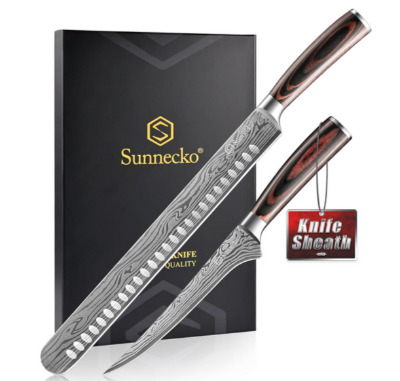
Sunnecko makes the kind of knife that appeals to people who grill and BBQ seriously. This set includes a slicing knife and a boning knife. It’s German high-carbon stainless steel, which is a sweet spot for performance.
What You Get
You get a carving/slicing knife, a separate boning knife, and the blades are German high-carbon stainless steel. The handles are ergonomic, and both pieces feel substantial in your hand. This is a two-knife set built for people who do more than just carve turkey.
Best Use Cases
The Sunnecko slicing knife is excellent for turkey, brisket, ham, and other large roasts. The boning knife is separate, which means you can use it for detailed work around joints and bones. This separation is actually practical—one knife for rough cutting, one for precision.
If you BBQ, this set is almost essential. The slicing knife handles brisket like a dream. The boning knife lets you separate meat from bone cleanly.
Key Features Explained
German high-carbon stainless steel is a hybrid approach. It combines the edge-holding power of high-carbon steel with the corrosion resistance of stainless. This means it gets sharp and stays sharp, but you don’t have to baby it like you would pure high-carbon steel.
The slicing blade is longer—designed to make long, smooth cuts. The boning blade is shorter and more maneuverable. Having two specialized tools is smarter than trying to do everything with one blade.
The handles use an ergonomic design that reduces hand fatigue. This matters when you’re working on a whole turkey or a large roast. Your hand gets tired fast with a poorly designed handle.
Real-Life Usage Insight
When you first pick up the Sunnecko slicing knife, you notice the quality. The weight is distributed well. The blade feels sharp, and the edge holds up impressively through extended use.
The boning knife is short enough to control easily but long enough to do real work. Separating the thighs from the breast is much easier with a dedicated boning blade than with the carving knife. You can actually feel the difference.
Together, these two knives handle almost any meat-related task. Carving turkey, slicing brisket, separating bones, trimming fat—all of it becomes easier.
Honest Pros and Cons
Pros:
- Excellent edge retention
- German high-carbon steel is a great material
- Two specialized knives instead of one
- Handles are comfortable and well-designed
- Good for BBQ and regular cooking
- Sharp out of the box
- Excellent quality for the price
- The boning knife is genuinely useful
Cons:
- Slightly higher price than basic sets
- Takes more storage space
- High-carbon steel requires a bit more care than pure stainless
- Requires occasional honing to maintain edge
- The weight might feel heavy to some users
- You need to learn how to use the boning knife properly
Performance Discussion
Performance is where Sunnecko truly excels. The slicing knife cuts through turkey skin and meat cleanly. The edge is sharp enough that you don’t need much pressure. The boning knife cuts around joints without slipping.
After carving a full turkey and then doing some general kitchen work, the edge is still sharp. Not as sharp as day one, but sharp enough that you’re not struggling. That’s excellent performance for the price.
The German high-carbon steel formula really does work. You get the best of both worlds—real sharpness and real durability.
Ease of Use
Both knives are easy to use, but they require understanding the right technique for each. The slicing knife is straightforward—long strokes downward. The boning knife needs more careful control since it’s shorter and you’re doing detailed work.
The handles are intuitive. Your hand naturally settles into the right position. There’s no weird learning curve with the grip.
Value for Money
This is a smart buy. You’re investing in two quality tools instead of one, which is practical. The price is reasonable for the quality you’re getting. If you cook with meat regularly, this set pays for itself quickly in terms of making your work easier and faster.
Brisket Slicing Knife – Ultra Sharp Premium 11-Inch Carving Knife
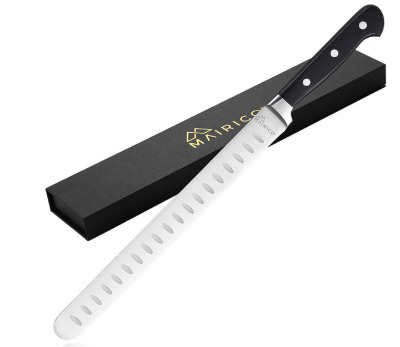
This is an 11-inch option that lives in the middle between the 8-inch knives and the 12-inch giants. It’s designed specifically for slicing large cuts, which makes it perfect for turkey.
What You Get
You get the knife itself. It’s 11 inches of premium stainless steel. The handle is ergonomic, and the blade comes extremely sharp. There’s no fork in this package—just the knife—but the knife is genuinely premium.
Best Use Cases
The 11-inch length is ideal for turkey, brisket, and large roasts. It’s long enough to make substantial cuts but not so long that beginners find it unwieldy. This blade length is honestly the sweet spot for most home cooks.
If you slice multiple types of meat, this knife does it all well. The blade is thin enough for fine slicing but robust enough to handle occasional contact with bone.
Key Features Explained
The premium stainless steel is the main story. This isn’t the cheaper stainless you find on budget knives. This is quality stainless that holds an edge remarkably well.
The 11-inch length gives you reach without overwhelming you. You can make long, smooth cuts down the turkey breast. The blade is thin, which reduces the effort needed to cut.
The handle is designed to reduce hand fatigue. It’s balanced well with the blade, so the whole knife feels like an extension of your arm rather than a tool you’re gripping.
Real-Life Usage Insight
The first thing you notice is the sharpness. Right out of the box, this knife is sharp. It cuts turkey skin cleanly without requiring any pressure. The meat slices smoothly.
The 11-inch length is practical. It’s longer than an 8-inch blade, so you make fewer cuts. But it’s not so long that you feel awkward using it. For most people, this is the perfect carving knife size.
The handle is comfortable for extended use. You won’t feel cramping or strain even when carving a large turkey and then slicing other meats. That comfort adds up over time.
Honest Pros and Cons
Pros:
- Extremely sharp out of the box
- 11-inch blade is the ideal length for most people
- Premium stainless steel holds edge well
- Comfortable handle for extended carving
- Good balance
- Reasonable price for the quality
- Versatile for multiple types of meat
Cons:
- No fork included
- Stainless steel requires some maintenance
- Premium price but not quite premium product quality
- No protective sheath included
- Might seem simple compared to fancier options
- Not quite at the level of true luxury knives
Performance Discussion
This knife performs admirably. It stays sharp through full turkey carving and beyond. The blade cuts cleanly. The slicing motion is smooth and controlled.
Edge retention is impressive. After carving a turkey and doing other kitchen tasks, you’re still using a genuinely sharp knife. Most knives lose their edge faster than this one does.
The balance is excellent. You’re not fighting the knife—it does the work for you. That’s what a quality blade should feel like.
Ease of Use
This knife is easy to use. The 11-inch blade is long enough to be effective but not so long that you lose control. The handle fits most hand sizes. Even beginners feel confident with this knife.
There’s no learning curve. You just pick it up and carve. That simplicity is actually a strength.
Value for Money
For an 11-inch premium knife at this price, you’re getting good value. You’re not paying luxury brand prices, but you’re getting quality close to that level. If you carve meat regularly, the improved experience is worth the cost.
PAUDIN Nakiri Knife – 7″ Razor Sharp Meat Cleaver
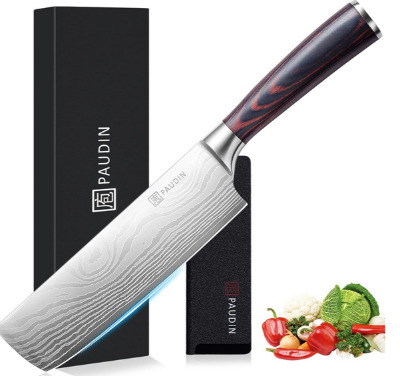
This is a different approach entirely. The Nakiri is an Asian-style knife with a wide, flat blade. It’s designed for slicing vegetables primarily, but it works on meat too.
What You Get
You get a 7-inch Nakiri blade made from high-carbon stainless steel. The handle is ergonomic and designed for comfort. The blade is thin and flat, which is the signature Nakiri design.
Best Use Cases
For turkey specifically, this knife is less ideal than the other options, but it still works. The Nakiri excels at slicing already-carved turkey into thinner pieces. It’s also fantastic for slicing vegetables, so it’s a more versatile kitchen knife overall.
If you want one knife that handles multiple jobs—vegetables, already-carved meat, and general kitchen work—the Nakiri is practical.
Key Features Explained
The Nakiri design is a wide, flat blade. This lets you slice using a rocking motion rather than a forward motion. Different technique, different results. The wide blade also let you scoop up sliced meat easily.
The high-carbon stainless steel is sharp and relatively easy to care for. High-carbon steel is more delicate than German steel, but it gets sharper and holds that sharpness longer.
The 7-inch blade is compact compared to carving knives. This makes it easier to control and store, but it means more cuts for the same job.
Real-Life Usage Insight
The Nakiri feels different in your hand. The flat blade and wide shape take some getting used to. But once you adapt, you appreciate the design.
For slicing a whole turkey without using a carving knife first, the Nakiri is awkward. The short blade and flat design aren’t ideal for breaking down a whole bird. But if you carve the turkey with another knife first, then use the Nakiri to slice the pieces thinner, it’s perfect.
The sharpness is excellent. High-carbon steel gets genuinely sharp, and this blade demonstrates that. Slicing is effortless.
Honest Pros and Cons
Pros:
- Extremely sharp
- Versatile for vegetables and meat
- Compact and easy to store
- High-carbon stainless steel is a quality material
- Lightweight and comfortable to use
- Rocking motion feels natural for many people
- Good for precision slicing
Cons:
- Not ideal for carving a whole turkey from scratch
- The flat blade design takes adjustment
- High-carbon steel is more prone to discoloration
- Shorter blade means more cuts needed
- Less practical for BBQ and large roasts
- Requires more careful hand washing than German steel
- Not specifically designed for this task
Performance Discussion
The Nakiri performs excellently at what it’s designed to do. It slices vegetables and pre-carved meat beautifully. The blade is sharp and stays sharp.
For carving a whole turkey, it’s not ideal. You’d need to use another knife first to separate the meat from bone, then use the Nakiri to slice further. That’s extra work.
The performance is high, but the application is narrower than the other options.
Ease of Use
Using a Nakiri requires a different technique than traditional carving knives. You rock the blade rather than pull it through. This takes practice, but it’s not hard.
If you’ve never used a Nakiri, expect a small learning curve. Once you adjust, it’s intuitive.
Value for Money
The price is reasonable for a quality Nakiri. You’re getting a versatile kitchen knife that does multiple jobs well. But it’s not specialized for carving turkey, which limits its value if that’s your main goal.
Comparison Insights: Which Knife Wins?
These five knives serve different purposes and appeal to different cooks. Let’s break down the comparisons that actually matter.
For Size: The 12-inch Cutluxe is the longest. The 11-inch Brisket knife is the practical sweet spot. The 8-inch WIZEKA is the shortest and easiest to control. The 7-inch Nakiri is in its own category entirely.
For Sharpness: The Cutluxe and Brisket knives arrive sharpest. The Sunnecko is also sharp thanks to the German high-carbon steel. The WIZEKA is adequately sharp but not exceptional. The Nakiri is extremely sharp due to high-carbon steel.
For Ease of Use: The WIZEKA wins because it includes a fork and the 8-inch blade is beginner-friendly. The 11-inch Brisket knife is also simple and intuitive. The Cutluxe requires more experience. The Sunnecko requires learning the boning knife. The Nakiri requires different technique.
For Versatility: The Sunnecko is most versatile with two different blades. The Cutluxe and Brisket knife handle multiple meats well. The WIZEKA does turkey well but is less versatile. The Nakiri is versatile across vegetables and thin slicing but not ideal for breaking down a whole turkey.
For Value: The WIZEKA offers the best starter value because it’s affordable and includes a fork. The Sunnecko offers good value with two blades. The 11-inch Brisket knife offers solid value for the quality. The Cutluxe is expensive but premium. The Nakiri is reasonably priced but less specialized for this task.
For Durability: German steel and high-carbon stainless are both durable. The Cutluxe is likely to last longest because of the full tang construction. The Sunnecko and Brisket knife are also built to last. The WIZEKA will need replacement eventually. The Nakiri will last well if cared for properly.
Buying Guide: How to Choose Your Carving Knife
With five solid options on the table, how do you choose? Ask yourself these questions.
How often do you carve meat?
If it’s just for turkey at one holiday meal, the WIZEKA makes sense. Affordable, complete, and you’re not overspending on a knife you use once yearly.
If you carve meat multiple times throughout the year, a premium option like the Cutluxe or Brisket knife is worth it. The improved experience adds up.
How much space do you have?
The 12-inch Cutluxe needs storage space. If you’re in a small kitchen, the 8-inch WIZEKA is more practical. The 11-inch Brisket knife splits the difference.
Do you want just a carving knife or a complete set?
The WIZEKA includes a fork, which is genuinely useful. The Sunnecko includes two different blades. Standalone knives like the Cutluxe and Brisket knife require you to have other tools.
What’s your budget?
$30-40 range: WIZEKA $50-70 range: Sunnecko, 11-inch Brisket knife $80-100+ range: Cutluxe $40-50 range: Nakiri (but less specialized)
Do you want to carve a whole turkey or slice pre-cut meat?
For whole turkey carving, get the Cutluxe, WIZEKA, Sunnecko, or Brisket knife. The Nakiri is better for slicing already-separated meat.
What’s your experience level?
Beginners: WIZEKA (small, includes fork, forgiving) Intermediate: Sunnecko (two tools, more options) Advanced: Cutluxe (size and weight require skill but offer rewards)
Who Should Buy These Products?
The Cutluxe is for:
- People who carve meat regularly
- Those who want a premium, lasting investment
- Cooks who appreciate quality tools
- People with adequate storage space
- BBQ enthusiasts
The WIZEKA is for:
- Holiday cooks who carve once or twice yearly
- Beginners learning the process
- People on a budget
- Those who want a complete set
- Anyone wanting to avoid overspending
The Sunnecko is for:
- BBQ enthusiasts
- Cooks who want two specialized knives
- People who want German quality without premium prices
- Those who carve meat multiple times yearly
- Anyone wanting versatility
The Brisket knife is for:
- People wanting the ideal carving knife length
- Those seeking premium quality at reasonable prices
- Cooks who carve various types of meat
- Anyone wanting a single, excellent tool
- People who want sharp and durable
The Nakiri is for:
- Cooks who want vegetable knife and meat slicer combined
- Those who appreciate Asian knife design
- People who want excellent sharpness
- Anyone wanting a versatile kitchen knife
- Cooks who slice pre-cut meat more than carving whole birds
Common Mistakes to Avoid
Mistake 1: Buying based only on price
The cheapest knife isn’t always the best deal. A knife that requires constant sharpening costs you time and effort. Spend a little more upfront and save yourself frustration.
Mistake 2: Getting a knife that’s too long for your comfort
A 12-inch blade is impressive, but if you can’t control it comfortably, it’s a waste. Be honest about your experience level. An 8 or 11-inch blade might serve you better.
Mistake 3: Ignoring the fork
A carving fork isn’t just an accessory—it’s essential. Holding a hot turkey steady while slicing is genuinely difficult without one. The WIZEKA gets this right by including one.
Mistake 4: Not considering what else you cook
If you only carve turkey, that’s fine. But if you also slice roasts, brisket, or ham, get a knife that’s versatile. The Cutluxe and Brisket knife work for all these tasks.
Mistake 5: Assuming all stainless steel is the same
It’s not. German stainless, high-carbon stainless, and basic stainless are all different. Quality matters. Read the details.
Mistake 6: Buying without considering storage
A 12-inch knife needs space. If your knife block is tiny, you’re going to regret the Cutluxe. Be realistic about where you’ll store it.
Mistake 7: Forgetting about maintenance
Some steels require more care than others. If you hate hand-washing delicate items, avoid high-carbon steel. If you don’t mind it, high-carbon gives you superior sharpness.
The Final Verdict
After reviewing these five knives, here’s what stands out.
For Most People: The 11-Inch Brisket Slicing Knife
If you carve turkey annually and want a knife that also handles other meats, this is it. The 11-inch blade is the practical sweet spot. The premium stainless steel holds an edge. The price is reasonable. You get a genuinely sharp knife without premium pricing.
For Beginners: The WIZEKA 8-Inch Set
Start here. You get a fork, which helps you feel confident. The 8-inch blade is manageable. The price is low enough that you’re not stressed about spending. Once you learn the basics, you can upgrade later.
For Serious Cooks: The Cutluxe 12-Inch Knife
If you carve meat regularly and want a knife that’ll last decades, the Cutluxe is worth the investment. The German steel is exceptional. The full tang construction is built to last. The 12-inch blade makes quick work of large birds.
For Multiple Uses: The Sunnecko BBQ Set
Two blades solve multiple problems. The slicing knife handles turkey and roasts. The boning knife handles detail work. If you cook with meat beyond just carving, this set makes sense.
For Vegetable and Meat Slicing: The PAUDIN Nakiri
If you want a knife that does vegetables beautifully and also slices meat, the Nakiri is a solid kitchen tool. It’s not specialized for carving whole turkeys, but it’s more versatile overall.
Making Your Choice
The best carving knife for turkey is the one you’ll actually use and that makes you feel confident. A tool that feels right in your hand makes the whole process easier.
If you’re uncertain, start with the WIZEKA. It’s affordable, it includes everything you need, and it performs well for a single holiday meal. Once you know what you want from a carving knife, you can upgrade.
If you cook regularly, jump to the 11-inch Brisket knife or Sunnecko. Both are legitimate quality at reasonable prices.
If you want the best and money isn’t the constraint, the Cutluxe is worth it. A quality knife makes cooking more enjoyable. That’s not a luxury—it’s an investment in your kitchen experience.
The turkey will roast beautifully. The table will look perfect. And now when it’s time to carve, you’ll have the right tool for the job. That changes everything.
Related Topics Worth Exploring
If you’re serious about meat preparation, a few other things matter. Keeping your carving knife sharp is essential. Most people underestimate how often knives need honing. A simple honing steel costs $15-30 and makes a real difference between uses.
Learning proper carving technique is equally important. A great knife is half the battle. The other half is knowing how to separate the legs, thighs, and breasts cleanly. That skill takes practice but pays dividends.
If you grill or smoke meat regularly, the Sunnecko or Cutluxe pairs well with other BBQ tools. A boning knife becomes invaluable when you’re trimming brisket or breaking down whole chickens.
Storage matters too. A magnetic knife strip or proper knife block protects your investment and keeps your kitchen organized. Loose knives in a drawer get dull fast and damage other items.
Wrapping It Up
Carving turkey doesn’t have to be stressful or frustrating. The right knife makes it straightforward. These five options all handle the job. Your job is matching the right option to your situation.
You now know what makes a carving knife work, what each of these five options does well and less well, and how to choose based on your needs. That’s enough to make a decision confidently.
Pick a knife. Use it. Carve your turkey cleanly. Enjoy the process instead of dreading it. That’s the whole point.

Hi, I’m Mary, the founder of KitchenClue.com. I’m deeply passionate about everything that makes a kitchen smarter, easier, and more enjoyable. I share hands-on insights and practical expertise on kitchen gear that truly helps in daily cooking. Along with my dedicated research team, we study products carefully, and our writers create honest, well-tested reviews using trusted, authentic sources—so you can choose kitchen tools with total confidence.


One Comment