Can You Use Metal Utensils On A Stainless Steel Pan: Guide
Yes, you can use metal utensils on a stainless steel pan with care and skill.
If you’re asking, can you use metal utensils on a stainless steel pan, the answer is yes. I’ve cooked thousands of meals on tri‑ply stainless in home and pro kitchens, and metal tools are part of the kit. In this guide, I’ll show you what really happens to the surface, what matters for performance, and the best ways to cook, clean, and keep that mirror shine. Read on to cook with confidence and protect your gear.
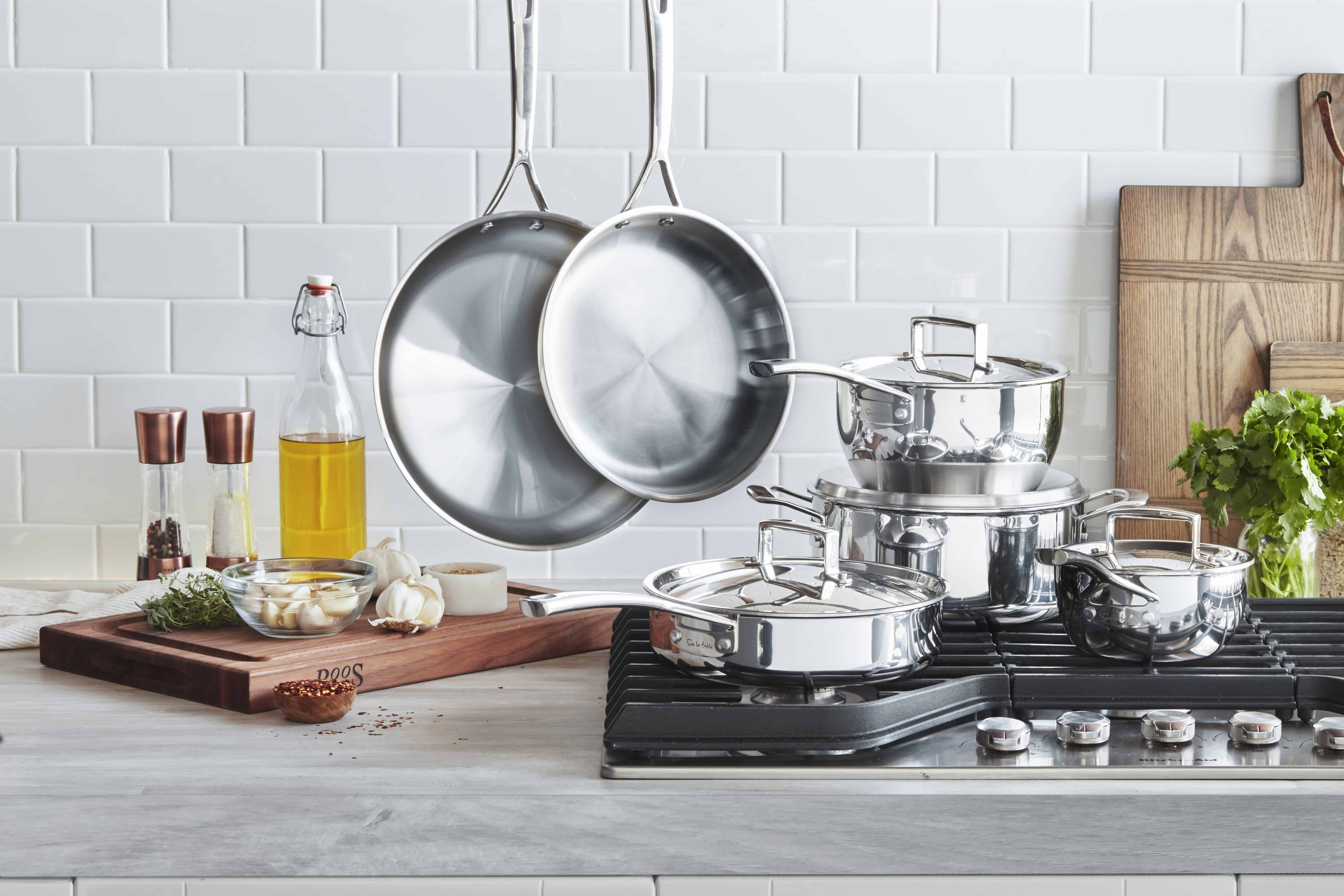
What stainless steel can handle and why utensil choice matters
Stainless steel is tough. Most cookware uses 18/10 or 18/8 steel bonded to an aluminum core. This blend resists rust, heat, and stains.
The cooking surface is not a soft coating. It is bare steel. That means it can take heat, scrubbing, and contact with tools. Scratches from normal use are usually fine and do not affect how food cooks.
Your pan’s finish may be brushed or mirror polished. Both can show marks. These marks are cosmetic. The pan still sears well and deglazes like a champ.

So, can you use metal utensils on a stainless steel pan?
Short answer: yes. Used with normal force, a metal spatula, spoon, or ladle will not ruin your pan. You may see light scuffs. Those are normal and safe.
Many cooks still ask, can you use metal utensils on a stainless steel pan during searing? Yes, as long as you avoid sharp edges and don’t gouge the surface. Think flexible fish spatula, not a knife tip.
In daily use, can you use metal utensils on a stainless steel pan without ruining it? Yes. Keep motions smooth. Scrape fond with the flat edge, not the corner. Let heat and liquid do most of the work.

Benefits and drawbacks of metal tools on stainless
Before you decide how often can you use metal utensils on a stainless steel pan, weigh these points.
Benefits
- Precise scraping lifts fond for great pan sauces.
- Thin metal spatulas slide cleanly under food.
- Tongs and whisks keep shape under heat.
Drawbacks
- Micro‑scratches build a patina over time.
- Aggressive scraping can haze a mirror finish.
- Sharp tools can leave deep grooves if misused.

Best practices to protect your pan while using metal utensils
Follow these tips any time you wonder, can you use metal utensils on a stainless steel pan in a safe way.
- Preheat, then add oil. This reduces sticking and the need for hard scraping.
- Use a thin, flat‑edged spatula. A fish spatula is perfect for eggs, fish, and smash burgers.
- Glide, don’t gouge. Keep the blade flat to the surface and use gentle, broad strokes.
- Deglaze smart. Add a splash of water, stock, or wine to release fond instead of forcing it loose.
- Avoid knife tips. Cut food on a board, not in the pan.
- Mind the rim. Do not bang spoons on the pan edge; it can dent or mar the finish.

Mistakes to avoid and when metal is a bad idea
There are moments when the answer to can you use metal utensils on a stainless steel pan is no. Be selective and smart.
- Do not use serrated blades or hard choppers in the pan. They can score grooves.
- Skip steel wool. It can haze the finish fast. Use nylon pads or a gentle stainless-safe cleanser.
- Avoid bleach and harsh chlorine cleaners. They can pit stainless steel.
- Do not thermal shock the pan. Don’t add icy liquid to a very hot, dry pan; it can warp.
- Note your other cookware. Never use metal on nonstick, enamel, or ceramic interiors.

Cleaning, removing scuffs, and keeping it shiny
If you tried it and now wonder, can you use metal utensils on a stainless steel pan and still keep it shiny, follow these steps.
Daily clean
- Soak with warm water and a drop of dish soap while the pan is still warm.
- Use a soft sponge or nylon scrubber. Rinse and dry right away to prevent spots.
For stuck‑on bits
- Simmer water with a spoon of baking soda. Scrape gently with a metal spatula once softened.
- Deglaze after cooking. This also builds flavor for sauces.
For rainbow tints or scuffs
- Wipe with a 1:1 mix of white vinegar and water to remove heat tint.
- Use a stainless cleanser with oxalic acid. Rub with the grain. Rinse well and dry.
- For stubborn marks, a non‑scratch scouring pad is safer than steel wool.

Real‑world notes from the line: what actually works
After years on the line, friends still ask me, can you use metal utensils on a stainless steel pan at home? Here is what I’ve learned.
- A thin metal fish spatula is the MVP. It slides under eggs once the pan is hot and oiled.
- Let food release. Protein will stick at first, then release when the crust forms. Don’t pry too soon.
- Build a light season. Over time, oil polymers form a faint layer that improves release. Clean well, but don’t chase a showroom shine daily.
- If you care about looks, rotate tools. Use silicone for stirring and metal only for flipping or scraping fond.

Frequently Asked Questions of can you use metal utensils on a stainless steel pan
Can you use metal utensils on a stainless steel pan every day?
Yes. Use gentle pressure and flat contact. Expect normal scuffs that do not harm cooking performance.
Will metal utensils damage the nonstick on stainless pans?
Stainless steel pans do not have a chemical nonstick layer. Metal can mark the surface but will not peel a coating.
Which metal utensil is safest for stainless?
A thin, flexible fish spatula is ideal. A rounded‑edge spoon and spring tongs are also safe with normal use.
Are scratches on stainless steel pans unsafe?
No. Light scratches are cosmetic. They do not affect food safety or how heat flows.
How do I stop food from sticking if I use metal tools?
Preheat, add oil, and let food release. Use deglazing to lift fond instead of scraping hard.
Can I use a metal whisk in my stainless saucepan?
Yes, if the base is flat and you whisk with moderate speed. Avoid hitting the sides with force.
Do metal utensils void warranties on stainless cookware?
Most stainless warranties allow metal tools with normal use. Check your brand’s manual for any limits.
Conclusion
You now have the full picture. Stainless steel is built for real cooking, and metal tools fit right in when you use sound technique. Keep pressure light, let heat and liquid work, and clean with the right products to protect the finish.
Put these tips to the test tonight. Sear a steak, deglaze with stock, and scrape up every drop of fond like a pro. Have questions or a tip of your own? Drop a comment, share your wins, and subscribe for more smart kitchen guides.

Hi, I’m Mary, the founder of KitchenClue.com. I’m deeply passionate about everything that makes a kitchen smarter, easier, and more enjoyable. I share hands-on insights and practical expertise on kitchen gear that truly helps in daily cooking. Along with my dedicated research team, we study products carefully, and our writers create honest, well-tested reviews using trusted, authentic sources—so you can choose kitchen tools with total confidence.