Can You Sous Vide In Ziploc Bags: Safe Tips, Best Results
Yes, you can sous vide in Ziploc freezer bags if you follow key safety steps.
If you’ve wondered can you sous vide in Ziploc bags without buying a vacuum sealer, you’re in the right place. I’ve tested this method for years in home kitchens and test labs. In this guide, I’ll explain when it’s safe, when to avoid it, and how to get flawless results with clear, simple steps.

What Sous Vide Is And Why The Bag Matters
Sous vide is a gentle, water-bath cooking method. You seal food in a bag, place it in warm water, and hold a precise temperature. This control gives tender steak, juicy chicken, and perfect eggs.
The bag is the bridge between food and water. It must be food safe, heat stable, and sealed. If the bag fails, water gets in and ruins texture. If the plastic is wrong, it may soften or leak. That’s why choosing the right bag is key for safety and taste.
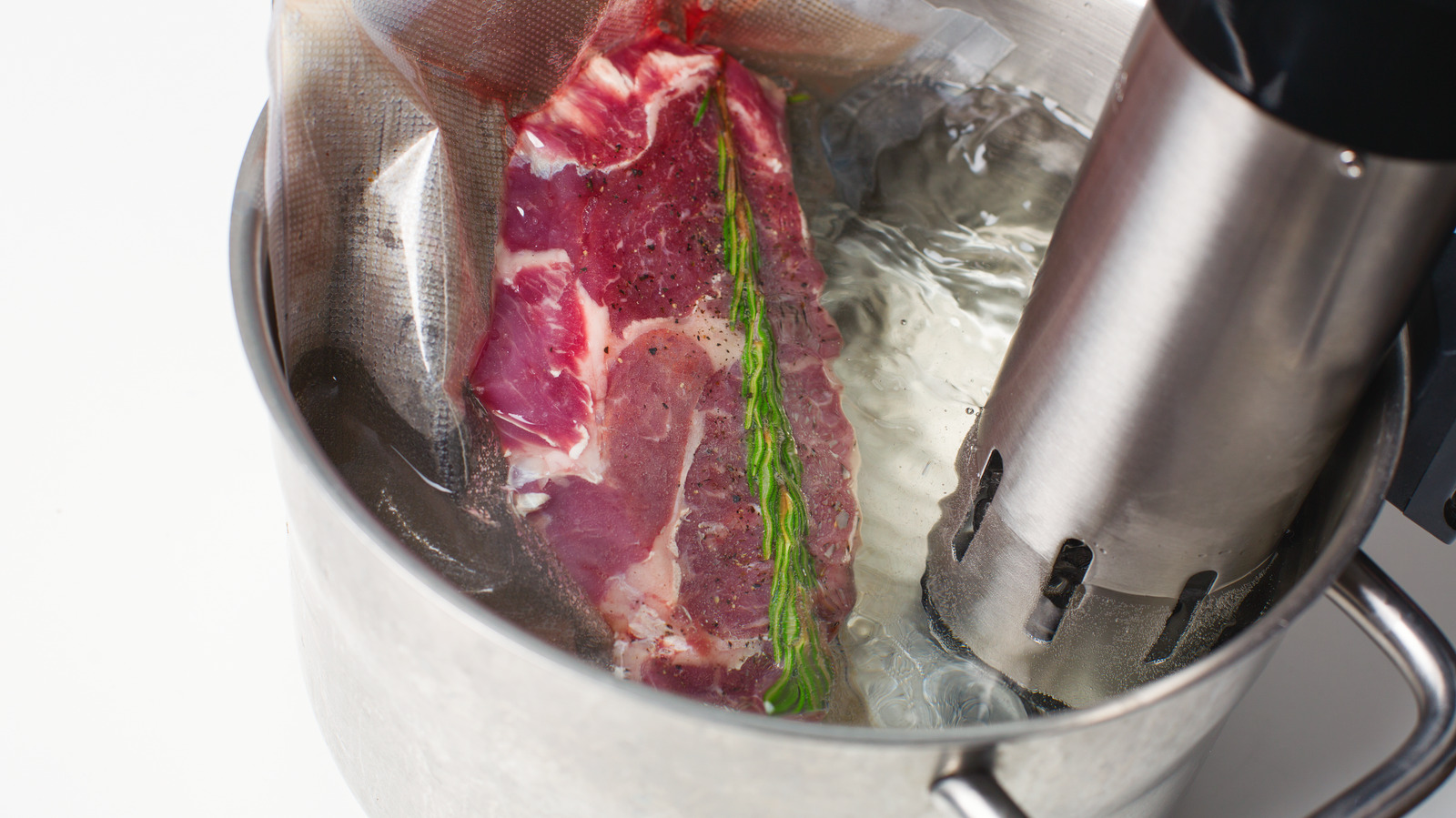
Can You Sous Vide In Ziploc Bags? The Short And Long Answer
Yes, you can sous vide in Ziploc bags, but choose freezer-grade bags. The freezer version is thicker, tougher, and holds a seal better than standard storage bags. Avoid slider-style bags. The slider track can let water in.
Here’s the long answer. For many foods at low to mid temperatures, Ziploc freezer bags work well. Think chicken breasts at 145–150°F, salmon at 122–125°F, or steak at 129–134°F. They also shine for quick cooks and reheats.
You should not rely on Ziploc bags for very high heat or very long cooks. If you plan to cook at 176°F for carrots, or hold short ribs at 158°F for 24–48 hours, switch to vacuum sealer bags or silicone bags. When friends ask me can you sous vide in Ziploc bags for brisket, my advice is no. Use a proper vacuum bag for long or hot baths.

Safety Basics: Plastics, Temperatures, And Food Safety
Ziploc-style freezer bags are usually made of polyethylene and are BPA-free. This plastic is food safe and stable at common sous vide temps. Still, heat tolerance has limits. The softening point of these bags is well below boiling. For that reason, I keep them at or under about 158°F for short to medium cook times.
Keep these safety rules in mind:
- Choose freezer-grade bags. They resist leaks and hold seals better.
- Do not submerge the zipper. Keep the seal above water with a clip.
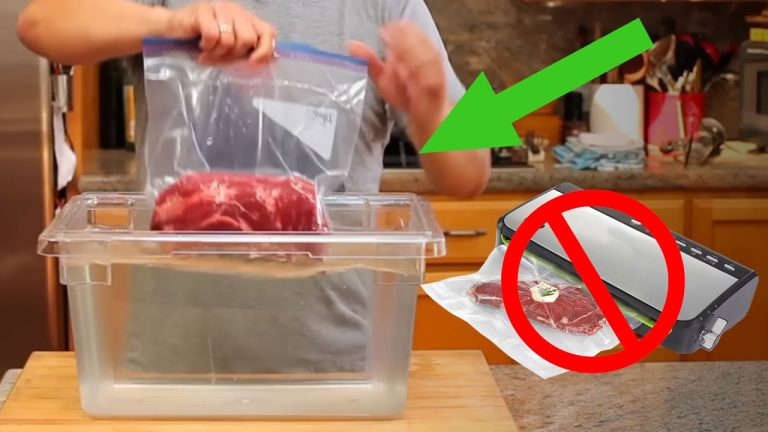
- Use the water displacement method. It pushes air out without a sealer.
- Avoid sharp bones or corners that can puncture the bag.
- For long cooks or high heat, use vacuum sealer bags rated for sous vide.
- Chill safely. After cooking, if you won’t eat right away, ice-bath chill, then refrigerate.
- Never reuse a bag that held raw meat. Toss it.
From a food safety view, sous vide relies on time and temperature. Lower temps can still pasteurize if you hold long enough. Follow trusted time-temp charts. Always finish meats with a quick sear for flavor and extra surface safety.
:max_bytes(150000):strip_icc()/GettyImages-1152048495-2000-269152a4422948bcb2fda3d56290fd5d.jpg)
Step-By-Step: How To Sous Vide With Ziploc Freezer Bags
I use this exact process at home for weeknight meals.
- Season and portion. Pat food dry. Season with salt, pepper, and herbs. Add a little oil or butter if you like.
- Bag it right. Use a new, freezer-grade Ziploc bag. Avoid slider tops. Label the bag before filling.
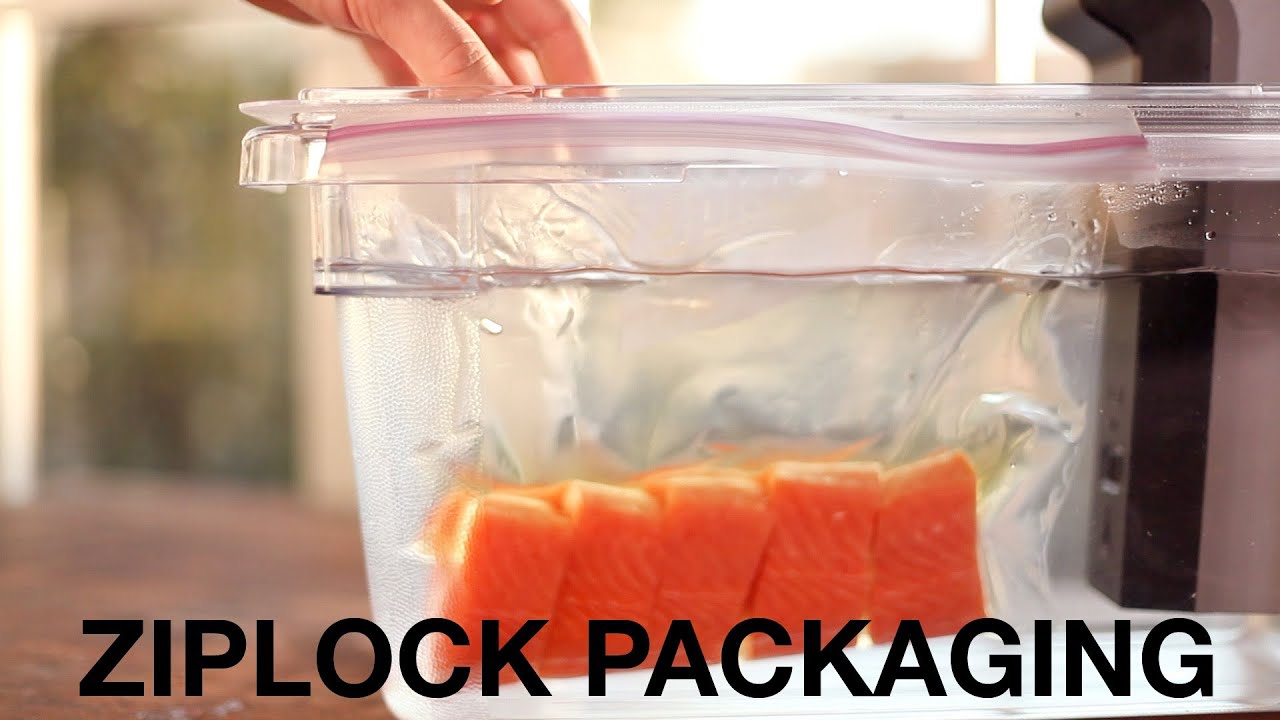
- Water displacement seal. Lower the bag slowly into the water, zipper up. The pressure pushes air out. Seal just before the zipper reaches the water line.
- Clip and position. Keep the zipper above water. Clip the top to the pot. Keep the bag away from the circulator’s intake.
- Weigh it down if needed. If it floats, add a clean metal spoon as a weight with a clip.
- Cook and monitor. Check the seal once mid-cook. Do not open the lid often.
- Finish strong. For meat, pat dry and sear fast in a hot pan with oil or on a grill. For fish or eggs, serve right away.
Real-life example: I cook chicken breasts at 149°F for 90 minutes in Ziploc freezer bags all the time. I clip the zipper above water and weigh the bottom with a spoon. The chicken is juicy and safe, every time.
When To Choose Vacuum Sealer Bags Or Silicone
Can you sous vide in Ziploc bags for every recipe? Not quite. Use vacuum or silicone bags when:
- Cooking at high heat. Vegetables at 183–190°F do better in rated bags.
- Cooking for a long time. Think 12–72 hours for short ribs or brisket.
- Doing big or bony cuts. Tough edges can poke thin plastic.
- You want better oxygen control. Vacuum bags reduce oxidation in long cooks.
- You want reusable gear. Silicone bags are sturdy, easy to clean, and handle high heat.
If a friend asks can you sous vide in Ziploc bags for 48-hour short ribs, I steer them to vacuum bags. The results are safer and more consistent.

Troubleshooting And Common Mistakes
Most issues are easy to fix.
- Floating bags: Trapped air is the cause. Re-seal with the water displacement method. Add a spoon weight.
- Leaks mid-cook: Zipper got wet or a corner poked the plastic. Double-bag next time. Keep the seal above water with a clip.
- Cloudy bag or smell: Food sat too long post-cook. Chill in an ice bath, then store cold. Eat within safe time frames.
- Soggy texture: Water entered the bag or the cook ran too hot. Re-check seals. Confirm your circulator’s temp is accurate.
- Uneven cook: The bag touched the heater or floated near the surface. Keep it centered with a rack and clip.
Personal lesson learned: I once let the zipper dip under water during a long cook. The seal failed in hour three. Since then, I always clip the zipper above the surface. Zero leaks since.

Environmental And Cost Considerations
Can you sous vide in Ziploc bags and still be eco-aware? You can be smart about it.
- Use freezer bags only when they fit the cook time and temp.
- For frequent use, invest in reusable silicone bags. They handle higher heat and last longer.
- Save vacuum bags for long or hot cooks. You will waste fewer failed bags this way.
- Do not reuse single-use bags after raw meat. Safety comes first.
On cost, Ziploc bags are budget-friendly for short cooks. Over time, a vacuum sealer pays off if you sous vide often. Silicone bags are a one-time buy and great for meal prep and leftovers.
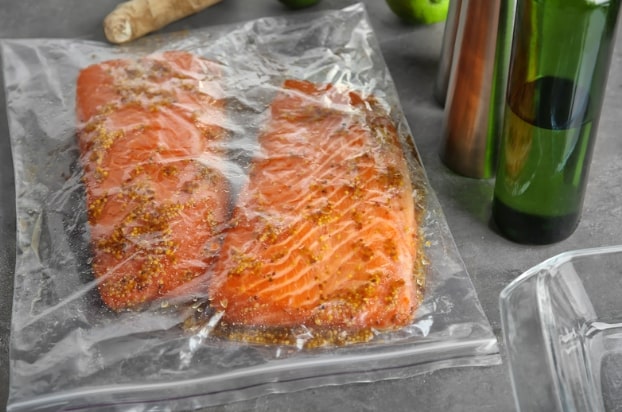
Frequently Asked Questions of can you sous vide in ziploc bags
Is it safe to use Ziploc bags for sous vide?
Yes, if you use freezer-grade bags, keep temps moderate, and seal well. Keep the zipper above water and avoid long or very hot cooks.
What temperature is safe for Ziploc bags in sous vide?
Stay at or below about 158°F for short to medium cooks. For higher heat or long times, use sous vide-rated vacuum or silicone bags.
Can I reuse Ziploc bags after sous vide?
Do not reuse bags that held raw meat. If the bag only held vegetables and is clean and undamaged, you can reuse at your own risk, but safety first.
Are Ziploc bags BPA-free and food safe?
Most name-brand freezer bags are BPA-free and made for food contact. They are commonly polyethylene, which is stable at typical sous vide temps.
Do I need a vacuum sealer to sous vide?
No. The water displacement method works well with Ziploc freezer bags. A vacuum sealer is better for long or high-heat cooks.
Can you sous vide in Ziploc bags for steak and chicken?
Yes. It works great for steak around 129–134°F and chicken at 145–150°F. Dry and sear after to get a crisp crust.
Will plastic chemicals leach into my food?
At typical sous vide temps and times with food-safe bags, risk is low. Use freezer-grade bags and avoid very high heat.
Conclusion
You asked can you sous vide in Ziploc bags, and the answer is yes—with limits. For low to mid temps and short to medium times, freezer-grade bags work well. For high heat, long cooks, or big cuts, switch to vacuum or silicone bags for safety and consistency.
Try a simple test tonight: sous vide chicken breasts at 149°F in Ziploc freezer bags, clip the zipper above water, then sear. Taste the difference. Want more tips? Subscribe, ask a question in the comments, or explore my other sous vide guides.

Hi, I’m Mary, the founder of KitchenClue.com. I’m deeply passionate about everything that makes a kitchen smarter, easier, and more enjoyable. I share hands-on insights and practical expertise on kitchen gear that truly helps in daily cooking. Along with my dedicated research team, we study products carefully, and our writers create honest, well-tested reviews using trusted, authentic sources—so you can choose kitchen tools with total confidence.