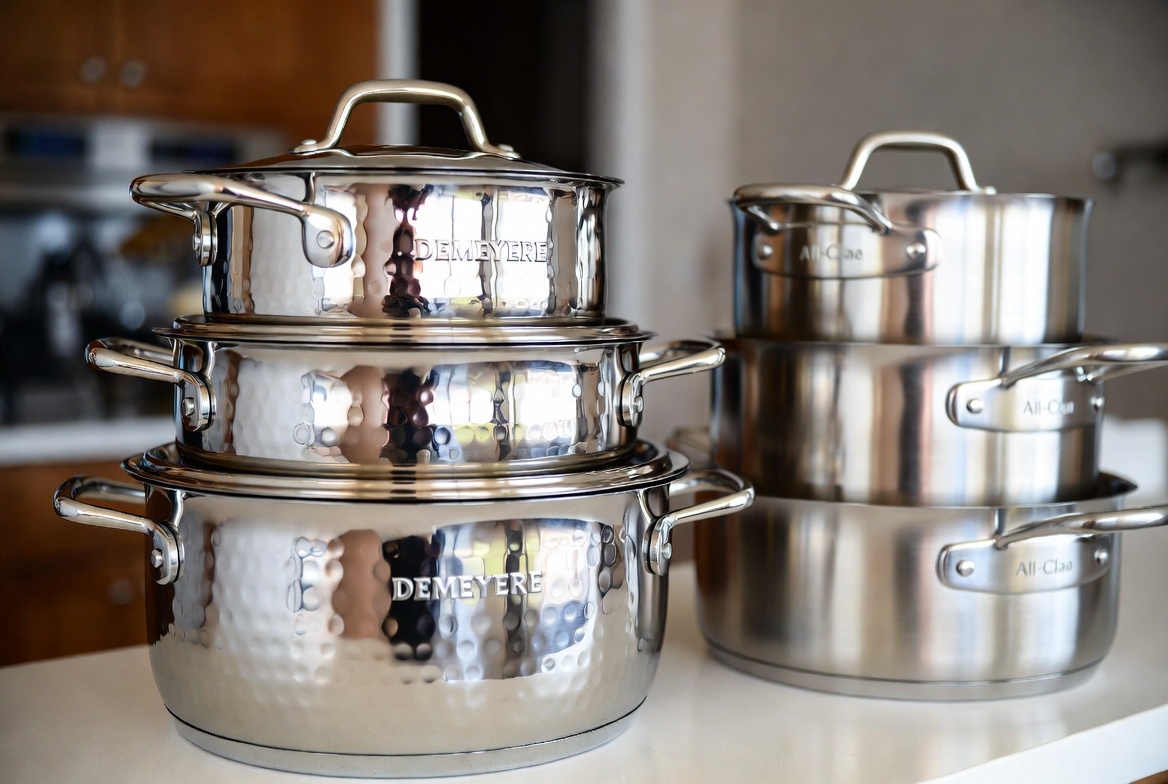
Demeyere vs All Clad Cookware
You want great cookware. You’ve heard the names Demeyere and All-Clad thrown around. And now you’re stuck trying to figure out which one is actually better for your kitchen.
Both brands are top-tier. Both cost serious money. But they are not the same — not even close.
This guide breaks it all down for you. Simple words. Clear comparisons. No fluff.
Let’s get into it.
A Quick Look at Both Brands
All-Clad is made in Pennsylvania, USA. It’s been a favorite among home cooks and professional chefs for decades. The brand is known for its stainless steel cookware with bonded layers of metal — what people call “clad” construction.
Demeyere comes from Belgium. It’s a slightly lesser-known name in the US, but it has a huge fan base in Europe. Demeyere is famous for its engineering-focused approach. They don’t just make pans — they obsess over how heat moves through metal.
Both brands sit at the premium end of the cookware market. You won’t find either on a budget shelf. But their philosophies are quite different, and that matters a lot when you’re spending this kind of money.
How They’re Built: The Core Difference
This is where things get really interesting.
All-Clad’s Bonded Construction
All-Clad uses a method called full-clad construction. This means layers of metal run all the way from the bottom to the sides of the pan.
Most All-Clad pans use three layers: stainless steel on the outside, aluminum in the middle, and stainless steel on the cooking surface. Some lines, like the D5, use five layers. The idea is that heat spreads evenly across the whole pan — bottom and sides together.
This is a big deal for cooking techniques like sautéing, where you want consistent heat on all surfaces.
Demeyere’s Silvinox and 7-Ply Base
Demeyere takes a different approach with its flagship line, the Atlantis (now called Proline in some markets).
Instead of cladding the entire pan, Demeyere focuses its heat-conducting layers in the base of the pan. The base can be 4.8mm thick — that’s a heavy, powerful bottom. The sides are thinner stainless steel.
Why? Because Demeyere argues that heat mainly enters from the bottom. Over-engineering the sides adds unnecessary weight without adding cooking performance.
Demeyere also treats its stainless steel surface with a process called Silvinox. This removes iron and other particles from the steel surface and leaves mostly chromium behind. The result is a cooking surface that is more hygienic, easier to clean, and more resistant to corrosion and fingerprints.
No other major cookware brand does this.
Heat Distribution: Who Wins?
Both brands distribute heat well. But they do it differently.
All-Clad’s full-clad design means heat spreads up the sides of the pan. This is great for cooking eggs, delicate sauces, and anything where you use the walls of the pan as an active cooking surface.
Demeyere’s thick base concentrates heat at the bottom. This makes it excellent for searing, browning, and high-heat cooking. The mass of that base retains heat beautifully — even when you drop a cold piece of meat in the pan.
If you mostly sauté vegetables or cook sauces, All-Clad may feel more intuitive.
If you love getting a hard sear on a steak or cooking at high heat, Demeyere’s base-heavy design performs brilliantly.
The Handle Situation
Handles matter more than people realize. You’re holding this thing over a hot stove, after all.
All-Clad handles are classic stainless steel. They’re riveted to the pan, which is strong and durable. The shape is a bit angular — some people love the feel, others find it a little uncomfortable during long cooking sessions. The handles stay relatively cool on the stovetop, but they can get warm.
Demeyere handles on the Atlantis/Proline line are welded, not riveted. This is a key point. No rivets means no food traps. Bacteria and grease can’t hide around rivet heads. Cleaning is simpler. The handles are ergonomically designed and feel solid in the hand.
Welded handles are considered a premium feature. All-Clad uses rivets even on its most expensive lines, while Demeyere went rivet-free as a design commitment.
Oven and Broiler Safety
Both brands handle the oven well.
All-Clad pans are generally oven-safe up to 500°F (260°C). The lids, if they come with lids, are usually oven-safe too, but check the specific line.
Demeyere Atlantis pans are oven-safe up to 500°F as well. Some lines can go even higher. The welded handles help here — no rivet materials to worry about.
For broiler use, both brands can handle it. Just keep an eye on any non-stick versions, as those have lower heat limits.
Non-Stick Options
Both All-Clad and Demeyere offer non-stick versions of their cookware.
All-Clad non-stick is well-regarded. The HA1 and NS1 lines are popular choices. They use hard-anodized aluminum bases with non-stick coatings. These are more affordable than their stainless steel counterparts and good for eggs and delicate foods.
Demeyere non-stick options include the Industry and Alu Pro lines. Demeyere uses a thicker base construction even in their non-stick pans, so you still get that heat retention advantage.
For everyday non-stick cooking, both perform well. The coating on Demeyere tends to be more durable, though this also depends on care and usage habits.
Induction Compatibility
If you have an induction cooktop, listen up.
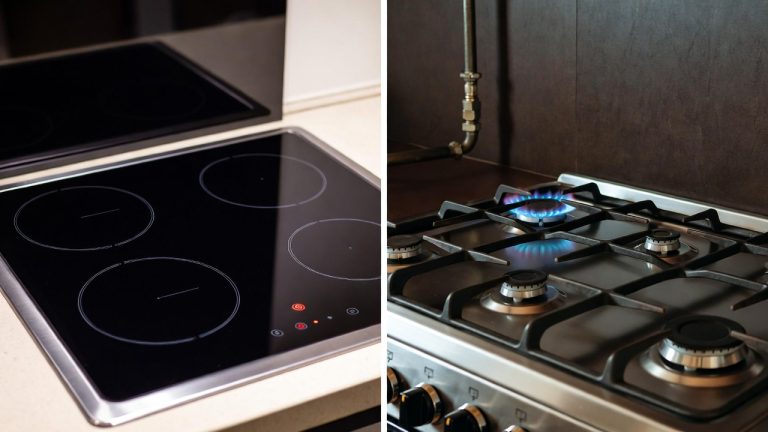
Both All-Clad and Demeyere work on induction. But Demeyere takes this seriously at a different level.
Demeyere developed a technology called InductoSeal (in older models) and now uses a magnetic steel base called Inductoseal or a related multi-layer base specifically optimized for induction energy transfer. The idea is that energy from your induction burner converts to heat as efficiently as possible.
All-Clad also works on induction because its outer layer is magnetic stainless steel. It performs well. But Demeyere’s engineering specifically targets induction efficiency, which can result in faster heating times on high-end induction stoves.
If induction cooking is a priority for you, Demeyere has a slight technical edge.
Weight Comparison
Here’s a practical point: these pans are heavy.
Demeyere Atlantis pans are noticeably heavier than most competitors, including All-Clad. That thick base adds real weight. A 12-inch skillet can feel like a workout after a long day of cooking.
All-Clad pans are lighter. The full-clad construction is efficient without being excessive. Most cooks find All-Clad easy to maneuver, flip, and pour from.
If you have wrist or arm issues, All-Clad’s lighter weight might be a real benefit. If you want maximum heat retention and don’t mind a heavy pan, Demeyere wins.
Price: What You’re Actually Paying
Let’s talk numbers — though specific prices change, the general relationship between these brands stays consistent.
All-Clad stainless steel skillets typically range from $100 to $200+ depending on the line. Sets can run from $400 to over $1,000.
Demeyere Atlantis is more expensive. Individual pieces often run $200 to $300+. Full sets can push well past $1,500.
All-Clad is premium. Demeyere is ultra-premium.
That said, both brands are built to last a lifetime with proper care. You’re not buying cookware you’ll replace in five years. Think of it as a long-term kitchen investment.
The Product Lines You Should Know About
All-Clad Lines
- D3 (Tri-Ply) – The classic. Three layers. Solid everyday performance. The most popular All-Clad line.
- D5 (5-Ply) – Five layers for even more heat distribution. Slower to heat but very consistent.
- Copper Core – Has a copper layer in the middle. Excellent heat responsiveness. Beautiful to look at.
- HA1 – Hard-anodized non-stick. Great for eggs and delicate cooking.
- G5 Graphite Core – A newer line using graphite for faster heating and lighter weight.
Demeyere Lines
- Atlantis / Proline Skillet – The flagship. Thick base, welded handle, Silvinox surface. Top of the line.
- Industry 5 – Five-layer construction. More affordable than Atlantis. Great everyday workhorse.
- Resto – Designed for slow cooking and braises. Deep sides, cast iron-like heat retention.
- Alu Pro – Non-stick aluminum with Demeyere’s thick base philosophy.
- Apollo – Mid-range option. Good performance without the full Atlantis price tag.
Which Brand Is Better for Beginners?
If you’re just starting to build your kitchen or upgrading from cheap pans, both brands can feel overwhelming.
For beginners, All-Clad D3 is probably the better starting point. It’s more affordable within the premium category, widely available, and easy to find tips and recipes designed around it. The learning curve for stainless steel cooking is the same regardless of brand, but All-Clad gives you great performance without spending Demeyere-level money right away.
Once you’re comfortable with stainless steel cooking and want to level up, that’s when Demeyere starts to make a lot of sense.
Which Brand Is Better for Serious Cooks?
If you cook every day, experiment with techniques, and care about the engineering behind your tools — Demeyere is worth the splurge.
The Silvinox surface is genuinely different. The welded handles are cleaner and more hygienic. The thick base gives you heat retention that behaves like cast iron without the weight or maintenance.
Professional chefs in Europe have trusted Demeyere for a long time. It’s not hype — it’s substance.
Maintenance and Care
Both brands require similar care.
For stainless steel pans:
- Always preheat the pan before adding oil.
- Let meat release naturally before flipping — don’t force it.
- Use Bar Keepers Friend to remove discoloration and stuck-on stains.
- Avoid harsh scrubbing pads that scratch the surface.
- Both are technically dishwasher-safe, but hand washing keeps them looking better longer.
Demeyere’s Silvinox surface is more resistant to discoloration than standard stainless steel. It’s easier to wipe clean after cooking and resists water spots better.
All-Clad pans can develop a rainbow discoloration (called “heat tinting”) over time. It’s harmless and easy to remove with Bar Keepers Friend, but it does require a bit more maintenance to keep them looking pristine.
Warranty
Both brands offer solid warranties.
All-Clad offers a lifetime warranty against defects. They stand behind their products.
Demeyere also offers a lifetime warranty on most of their stainless steel cookware. Their non-stick lines typically come with a shorter warranty period.
Neither brand makes it difficult to reach customer service. Both have good reputations for honoring their warranty policies.
Common Complaints About Each Brand
All-Clad Complaints
- Riveted handles can trap food and grease.
- The handle shape isn’t comfortable for everyone.
- Rainbow discoloration appears with heavy use.
- Some users find the D5 heats unevenly compared to D3.
Demeyere Complaints
- The weight is real — these pans are heavy.
- Price is a barrier for many home cooks.
- Less widely available in the US compared to All-Clad.
- The range of lines can be confusing to navigate.
Head-to-Head Summary
| Feature | All-Clad | Demeyere |
|---|---|---|
| Construction | Full-clad (sides and base) | Thick base, thinner sides |
| Surface treatment | Standard stainless steel | Silvinox treatment |
| Handle type | Riveted | Welded (no rivets) |
| Weight | Medium | Heavier |
| Induction performance | Very good | Excellent |
| Ease of cleaning | Good | Very good |
| Price range | Premium | Ultra-premium |
| Best for | Everyday cooking, sautéing | High-heat cooking, searing |
| Made in | USA | Belgium |
Real Talk: Which One Should You Buy?
Here’s the honest answer.
Buy All-Clad if:
- You want premium stainless steel without the highest price tag.
- You do a lot of sautéing and want heat up the sides of the pan.
- You’re newer to high-end cookware and want to learn without overspending.
- You want something easy to find at stores and online.
Buy Demeyere if:
- You cook on induction and want maximum efficiency.
- You love searing proteins and want serious heat retention.
- You care about a hygienic, rivet-free design.
- You want the absolute best and are willing to pay for it.
The truth is, both brands make exceptional cookware. You won’t be disappointed with either. But they suit different cooking styles and different priorities.
FAQs
Is Demeyere really better than All-Clad? In some ways, yes. The Silvinox surface, welded handles, and induction optimization give Demeyere real technical advantages. But All-Clad’s full-clad construction is better for sautéing and side-wall cooking. It depends on your cooking style.
Can I mix All-Clad and Demeyere in my kitchen? Absolutely. Many serious cooks own pieces from both brands. You might use a Demeyere skillet for searing and All-Clad saucepans for sauces.
Is All-Clad D5 better than D3? Not necessarily better — just different. D5 heats more slowly but more evenly. D3 responds faster to heat changes. Most cooks find D3 more versatile.
Does Demeyere Atlantis work on gas stoves? Yes. It works on all heat sources — gas, electric, induction, and even the oven.
Is the price difference between Demeyere and All-Clad justified? For daily home cooking, All-Clad offers excellent value at its price point. Demeyere’s extra cost buys you specific engineering advantages that matter most to serious cooks or those with induction cooktops.
Final Thoughts
You can’t go wrong with either brand. Seriously.
All-Clad has built a legendary reputation for a reason. The cookware performs beautifully, lasts for life, and is made in the USA with real craftsmanship.
Demeyere brings Belgian precision engineering to the kitchen. The Silvinox surface, the welded handles, the thick induction-optimized base — these aren’t marketing buzzwords. They’re real improvements that you feel when you cook.
If money is not a constraint, Demeyere Atlantis is arguably the finest stainless steel cookware available to home cooks today.
If you want exceptional performance at a slightly more reasonable price, All-Clad D3 or D5 will serve you beautifully for the rest of your life.
Cook more. Stress less. And buy the pan that fits your kitchen, your style, and your budget.

Hi, I’m Mary, the founder of KitchenClue.com. I’m deeply passionate about everything that makes a kitchen smarter, easier, and more enjoyable. I share hands-on insights and practical expertise on kitchen gear that truly helps in daily cooking. Along with my dedicated research team, we study products carefully, and our writers create honest, well-tested reviews using trusted, authentic sources—so you can choose kitchen tools with total confidence.