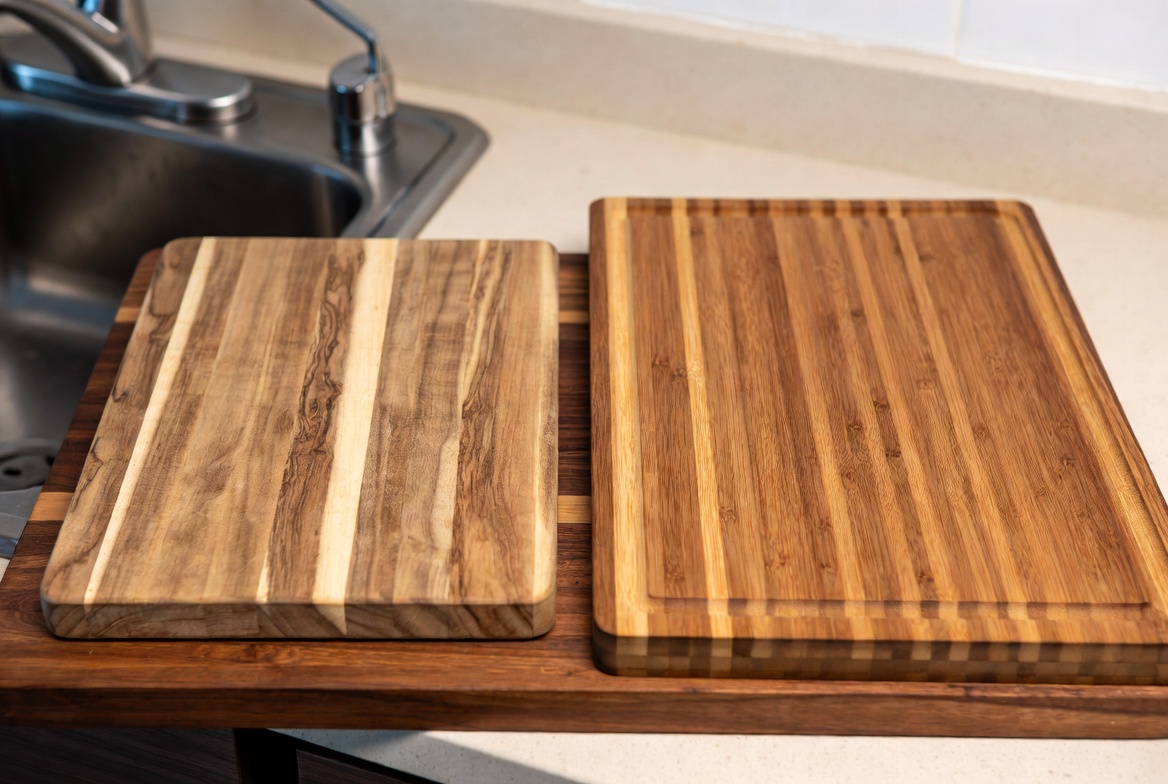
Acacia vs Bamboo Cutting Boards
When you’re standing in the kitchen supply store or scrolling through online shops, the cutting board section can feel overwhelming. Two names keep popping up: acacia and bamboo. Both seem great. Both sound natural. Both cost around the same. So how do you pick?
This guide breaks down everything you need to know about these two cutting board types. By the end, you’ll know exactly which one fits your kitchen and your cooking style.
What Are These Boards Made From?
Bamboo Cutting Boards
Bamboo isn’t actually wood. It’s a grass. A really tough grass that grows super fast. This matters because it affects everything about how the board feels, looks, and performs.
Bamboo grows in thick stalks. Manufacturers take these stalks and split them into strips. Then they press these strips together with food-safe adhesives to create a solid board. The result is a dense, hard cutting surface that’s ready for your knives.
The harvesting process for bamboo is quick. The plant regenerates within just a few years. This makes bamboo one of the most renewable resources you can buy for your kitchen. No trees need to be cut down. The bamboo stalk just grows back.
Acacia Cutting Boards
Acacia comes from a real tree. The acacia tree grows in tropical and subtropical regions. The wood is naturally dense and hard, which is why it works so well for cutting boards.
Unlike bamboo, acacia requires harvesting a tree. However, many acacia trees grow in areas where they’re super abundant. Sustainable harvesting practices mean new trees grow to replace the ones used. The wood has a beautiful golden or reddish-brown tone that makes cutting boards look gorgeous on your counter.
Durability: Which Board Lasts Longer?
Let’s talk about what matters most in a cutting board: how long it survives in your kitchen.
Bamboo’s Track Record
Bamboo cutting boards are incredibly durable. The grass fibers are packed tight together, creating a surface that resists damage from daily use. Your knife won’t sink into a bamboo board as easily as it might into softer woods.
That said, bamboo has a slight weakness. The adhesive that holds the strips together can eventually break down over time. This is especially true if you soak bamboo boards in water for long periods or run them through the dishwasher repeatedly. The water seeps into the seams and weakens the glue.
With proper care, a bamboo cutting board can last five to ten years or more. Many home cooks get even longer use out of theirs by treating them right.
Acacia’s Strength
Acacia wood is naturally hard and strong. The wood structure itself doesn’t rely on adhesives the way bamboo does. This means it resists water damage a bit better and doesn’t have the same weakness at seams.
Acacia boards often last just as long as bamboo boards, sometimes even longer. The durability really comes down to how you treat it. A well-maintained acacia board can stick around for a decade without problems.
One thing to note: acacia is denser than bamboo, which means it’s heavier. That extra weight actually makes it less likely to slide around on your counter while you’re chopping.
Knife-Friendliness: How Safe Is Your Blade?
This is crucial. You want a board that keeps your knife sharp, not one that dulls the blade after a few uses.
Bamboo and Your Knives
Here’s something that surprises people: bamboo is harder than many hardwoods. That hardness is both good and bad for your knives.
The good part is that your knife won’t sink too deep into the surface, which would cause real damage. The bad part is that the hardness can actually dull your blade a bit faster than you’d like. It’s not as gentle on knife edges as wood-based boards.
If you use expensive knives that you sharpen regularly, a bamboo board works fine. You’ll just need to hone your knives a bit more often. For everyday kitchen knives that are more forgiving, it’s barely noticeable.
Acacia for Blade Care
Acacia is softer than bamboo despite being called a hardwood. This softer surface is kinder to your knife edges. Your blade stays sharper longer between sharpenings.
Cooks who care a lot about their knives often prefer acacia for this reason. The board kind of hugs the blade rather than resisting it. Over time, this means less work maintaining your knives.
That said, the difference isn’t huge. Both boards are fine for regular kitchen use. This only becomes a real concern if you’re using professional-grade knives that cost hundreds of dollars.
Bacteria and Hygiene: Which Is Cleaner?
Food safety matters. You need to know that the board you’re using won’t harbor harmful bacteria.
Bamboo’s Antibacterial Properties
Here’s an interesting fact: bamboo has natural antibacterial properties. These come from the plant itself, not anything added during manufacturing. Bamboo naturally resists the growth of bacteria and fungi.
This means that even if you forget to clean your bamboo board immediately after use, it’s less likely to develop bacteria compared to other materials. Pretty neat, right?
That said, this doesn’t mean you can skip washing it. Regular cleaning with hot soapy water is still essential. But that natural protection is a nice bonus.
Acacia’s Safety Profile
Acacia wood doesn’t have the same natural antibacterial properties that bamboo does. This means bacteria can more easily take hold if the board isn’t cleaned properly.
The good news is that acacia is still completely food-safe when maintained correctly. Washing it with hot soapy water right after use keeps it clean and hygienic. Just don’t let it sit with food particles on it for hours.
Maintenance: Daily Care and Upkeep
Both boards need regular care. How hard is that care? Let’s break it down.
Caring for Bamboo Boards
Clean your bamboo board right after use with hot soapy water and a sponge. Rinse it well and dry it with a cloth. Don’t leave water sitting on it.
Once every month or two, give it some love with food-grade mineral oil. Rub the oil all over the board, let it soak in, and wipe away the excess. This keeps the bamboo from drying out and cracking.
Never put bamboo boards in the dishwasher. The heat and excess water damage the adhesive over time. Hand washing is the way to go.
Skip the bleach and harsh chemicals. Mild soap works perfectly fine. If you have stubborn stains, lemon juice and salt make a great natural scrub.
Caring for Acacia Boards
Acacia maintenance is similar. Wash with hot soapy water right after use. Dry it promptly with a cloth.
Oil your acacia board every month or two with food-grade mineral oil or food-safe cutting board oil. Just like bamboo, this keeps the wood from drying out and developing cracks.
Acacia is slightly more water-resistant than bamboo, so it’s a bit more forgiving if you forget to dry it immediately. Still, drying it right away is the best practice.
Again, skip the dishwasher. Hand washing preserves the board’s finish and protects the surface.
Appearance and Aesthetics
If you leave your cutting board on the counter, appearance matters.
Bamboo’s Look
Bamboo boards are typically light, almost blonde in color. They’re often uniform-looking because of how they’re manufactured. The grain pattern is gentle and consistent.
Some people find this clean, modern aesthetic appealing. The light color fits with contemporary kitchen designs. It looks streamlined and simple.
Over time, bamboo boards can develop a slightly yellowed appearance, especially if you oil them regularly. Some cooks love this aged look. Others prefer to keep it looking fresh by lightly sanding the surface.
Acacia’s Beauty
Acacia has stunning natural colors. You’ll see rich golden tones, warm browns, and sometimes even reddish streaks running through the wood. Each board is unique because the grain patterns vary.
This natural variation makes acacia boards real statement pieces. They look expensive and beautiful sitting on your counter. If kitchen aesthetics matter to you, acacia has a clear advantage.
The darker wood also hides stains and marks better than light bamboo boards. Regular use and minor knife marks blend into the grain rather than standing out.
Cost Comparison: What’s Your Budget?
Price is often the deciding factor. Let’s see how these boards stack up.
Bamboo Pricing
Bamboo cutting boards are usually the cheaper option. You can find decent bamboo boards for twenty to forty dollars. High-end bamboo boards might cost sixty to eighty dollars.
Since bamboo grows so quickly and is abundant, manufacturing costs are lower. That savings gets passed to you.
Acacia Pricing
Acacia boards typically cost a bit more. Standard acacia boards run thirty to fifty dollars. Beautiful, larger acacia boards can cost seventy to one hundred dollars or more.
The extra cost comes from the slower growth rate and the visual appeal of the natural wood grain.
For most home cooks, the price difference isn’t huge. You’re talking about maybe ten to twenty dollars more for acacia. Whether that’s worth it depends on your priorities.
Environmental Impact: The Sustainability Question
If you care about the planet, this matters.
Bamboo’s Environmental Edge
Bamboo is a sustainability superstar. The plant is one of the fastest-growing resources on Earth. Harvesting bamboo doesn’t require replanting because it regenerates naturally.
Bamboo also needs very little chemical treatment to grow. No pesticides are usually necessary. It absorbs more carbon dioxide than many trees and releases more oxygen.
The main environmental concern with bamboo is transportation. If your board comes from Asia and ships across the world, that carbon footprint adds up. But even with shipping, bamboo remains pretty eco-friendly.
Acacia’s Environmental Footprint
Acacia is renewable, but it grows slower than bamboo. Trees take years to mature before they can be harvested.
Sustainably managed acacia forests are environmentally responsible. They support biodiversity and prevent deforestation. However, you need to buy from reputable companies that source responsibly.
The transportation distance matters here too. Where the acacia grows affects how far it travels to reach you.
Both options are better than plastic cutting boards, which never break down. Both are more sustainable than imported hardwoods that come from unsustainable logging.
Performance in the Kitchen: Real-World Use
Enough theory. How do these boards actually perform when you’re cooking?
Using Bamboo in Daily Cooking
Bamboo boards are lightweight and easy to move around. If you have limited counter space, you can quickly store a bamboo board or move it aside.
The smooth surface works well for slicing meats and chopping vegetables. Your knife glides across it easily. The board won’t move around excessively because of its moderate weight.
For wet tasks like preparing fish, the water resistance of bamboo is helpful. Water doesn’t soak in as fast, so the board stays in better condition.
The sound is different from acacia. Bamboo makes a bit of a sharper sound when you chop. Some cooks like this feedback. Others find it slightly harsh.
Using Acacia in Daily Cooking
Acacia’s weight keeps it stable. You won’t have it sliding around while you’re chopping hard vegetables or breaking down meat.
The softer surface is gentler on your knife, which feels nice during repetitive cutting tasks. Your arm gets less jarring feedback.
Acacia absorbs water faster than bamboo, so you need to be more careful about drying it immediately. But that water absorption means it grips the counter slightly better due to moisture.
The warm, natural appearance of acacia just feels good in the kitchen. Cooks often feel more motivated to keep an attractive board clean and well-maintained.
The Stain Factor: Dealing With Discoloration
Both boards can stain. Let’s talk about what happens.
Staining on Bamboo
Bamboo boards show stains more obviously because of the light color. Beet juice, turmeric, tomato sauce—all of these leave marks.
The stains are usually just cosmetic. They don’t damage the board or make it unsafe. But they’re visible.
You can minimize staining by rinsing the board immediately after chopping colorful foods. For stubborn stains, a paste of baking soda and water works wonders.
Staining on Acacia
The darker color of acacia hides stains beautifully. That turmeric powder or beet juice mark that would stand out on bamboo barely shows on acacia.
This is a genuine practical advantage if you use a lot of colorful ingredients. Your board stays looking good with less effort.
Weight and Size: Finding What Works
The physical characteristics matter more than people realize.
Bamboo Dimensions
Bamboo boards come in a wide variety of sizes. You can find small boards perfect for a cutting station and large boards for batch prepping.
The light weight makes them easy to move. If you’re a home cook who uses one board for everything, the weight isn’t really an issue.
If you’re elderly or have limited hand strength, the lighter weight of bamboo is genuinely helpful.
Acacia Dimensions
Acacia boards also come in various sizes. The added weight is noticeable but not problematic for most cooks.
Heavier boards actually stay in place better, which some cooks appreciate. You’re not constantly repositioning the board while cutting.
If you have a small kitchen or limited cabinet space, the extra weight of acacia might be a consideration.
Special Considerations for Different Cooks
Not everyone has the same needs. Let’s look at specific situations.
For the Health-Conscious Cook
If food safety is your top priority, bamboo’s natural antibacterial properties give it a slight edge. That doesn’t mean acacia is unsafe—it just means bamboo has an extra layer of protection.
For the Knife Enthusiast
If you love your knives and sharpen them regularly, acacia’s softer surface is more forgiving. Your blade stays sharp longer between maintenance sessions.
For the Environmentally Aware
Bamboo is the greener choice. Its rapid regeneration and minimal pesticide needs make it the most sustainable option.
For the Aesthetic Lover
If your cutting board is on display and you care about how it looks, acacia wins. The natural grain patterns and warm colors are genuinely beautiful.
For the Budget-Conscious
Bamboo is more affordable. If price is your main concern, bamboo boards offer excellent quality at a lower cost.
For the Apartment Dweller
Bamboo’s lighter weight and ability to hang or store easily make it perfect for small spaces.
Common Myths About These Boards
Let’s bust some misconceptions.
Myth: Bamboo isn’t as durable as wood.
Wrong. Bamboo is actually very durable and lasts just as long as acacia when cared for properly.
Myth: Acacia is better for bacteria control.
Wrong. Bamboo actually has natural antibacterial properties, giving it an edge in hygiene.
Myth: You can wash either board in the dishwasher.
Wrong. Both boards should be hand-washed. Dishwashers damage them.
Myth: Bamboo cutting boards are always cheap quality.
Wrong. You can find high-quality bamboo boards at any price point. Cheap bamboo boards exist, but so do cheap acacia boards.
Myth: Acacia wood doesn’t need oiling.
Wrong. Both boards benefit from regular oiling to prevent drying and cracking.
Making Your Final Decision
Here’s a simple framework to help you choose.
Pick bamboo if you:
- Want to save money
- Care about environmental sustainability
- Prefer a lightweight board
- Like the natural antibacterial properties
- Want a clean, modern aesthetic
Pick acacia if you:
- Love the warm, natural wood appearance
- Want to protect expensive knives from dulling
- Prefer a heavier, more stable board
- Don’t mind spending a bit more
- Want a board that hides stains
- Plan to display your board on the counter
Real Talk: You Really Can’t Go Wrong
Here’s the honest truth: both bamboo and acacia cutting boards are excellent. Either one will serve you well in the kitchen.
The differences are real, but they’re subtle. You’re not choosing between a great board and a terrible board. You’re choosing between two great boards based on what matters most to you.
Some cooks end up owning both. They use one for delicate tasks and one for rough chopping. They have one for display and one that stays in a drawer.
Wrapping Up
The acacia versus bamboo debate doesn’t have a one-size-fits-all answer. Both materials offer durability, food safety, and years of kitchen service.
Bamboo shines with its environmental benefits, lower cost, and natural antibacterial properties. It’s an excellent choice if you value sustainability and have a tighter budget.
Acacia impresses with its stunning natural appearance, gentler impact on knife blades, and excellent stability. It’s perfect if you want a beautiful, long-lasting board that looks great in your kitchen.
Take time to think about what matters most to you. Does price drive your decision? Do you care about the environment? Is the look important? Do you have expensive knives?
Once you know what you’re prioritizing, the choice becomes clear. Head to the store or browse online with confidence knowing that you’ll get a great cutting board either way.
Your kitchen will be better equipped, your food prep will be smoother, and you’ll have a board that serves you well for years to come.
Happy chopping!

Hi, I’m Mary, the founder of KitchenClue.com. I’m deeply passionate about everything that makes a kitchen smarter, easier, and more enjoyable. I share hands-on insights and practical expertise on kitchen gear that truly helps in daily cooking. Along with my dedicated research team, we study products carefully, and our writers create honest, well-tested reviews using trusted, authentic sources—so you can choose kitchen tools with total confidence.