Can You Put A Griddle On A Grill: Safe Setup Guide 2026
Yes, you can put a griddle on a grill for stable, even, high-heat cooking.
If you love seared burgers, crispy bacon, and diner-style pancakes, this guide is for you. I have spent years testing flat-top setups on gas, charcoal, pellet, and kamado grills. In this deep dive on can you put a griddle on a grill, I will show you how it works, what to buy, how to set up safely, and how to cook like a pro without wasting fuel or risking flare-ups.
How a Griddle Works on a Grill
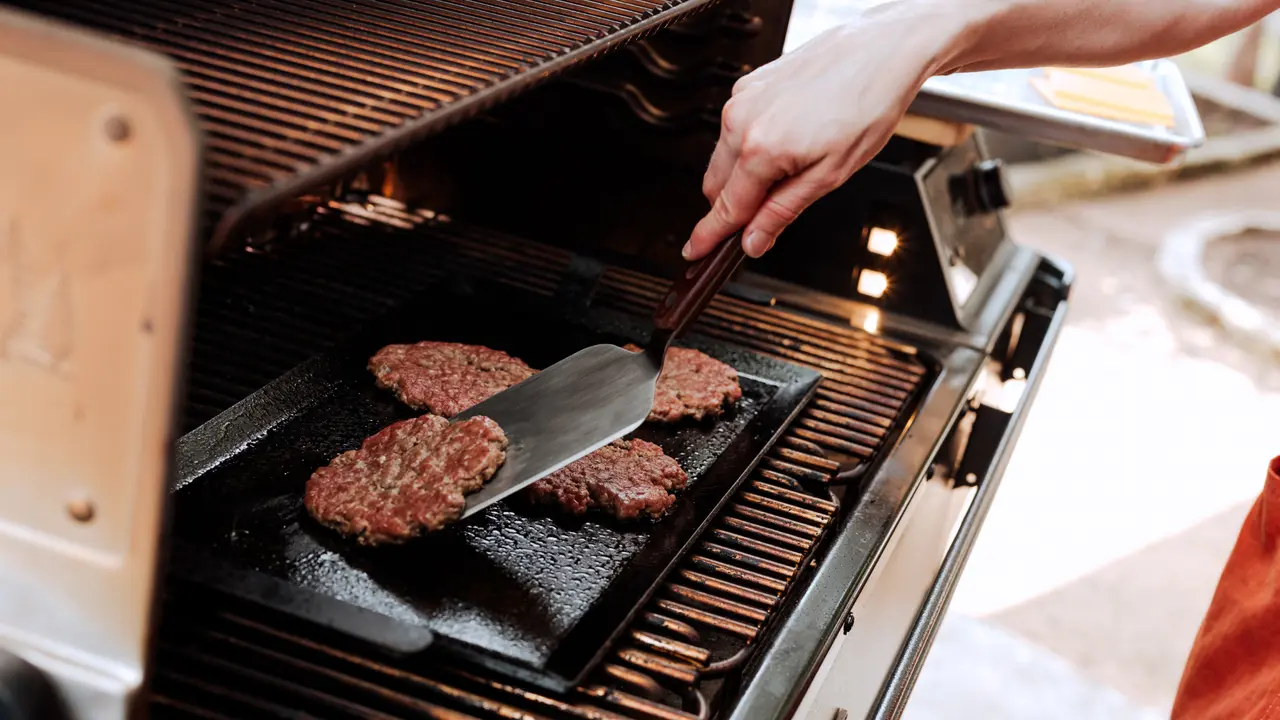
A griddle turns your open grate into a solid flat-top. It captures heat and spreads it across a surface for even browning. That means better sears, fewer flare-ups, and easy control over small foods.
On a grill, you heat the griddle with burners or coals below. The metal plate stores heat and cooks by direct contact. Cast iron and carbon steel hold heat very well. Stainless steel heats fast and resists rust but stores less heat.
This setup shines for smash burgers, fried rice, fajitas, scallops, and breakfast. It also saves delicate foods from falling through grates. If you have ever lost shrimp through the bars, a griddle feels like magic.

Can You Put a Griddle on a Grill?
Yes, and it is one of the best upgrades for backyard cooking. Can you put a griddle on a grill to make a flat-top surface for searing, frying, and sautéing? You sure can, and you do not need a dedicated flat-top.
There are a few limits. You must manage airflow so the fire breathes. You must control grease so it does not pool and flare. You must preheat and avoid thermal shock. Do these right, and the results rival a diner flat-top.
Using can you put a griddle on a grill also saves space. You get two tools in one: classic grate marks when you want them, and a smooth, even plate when you do not.
Types of Griddles and Best Grill Pairings
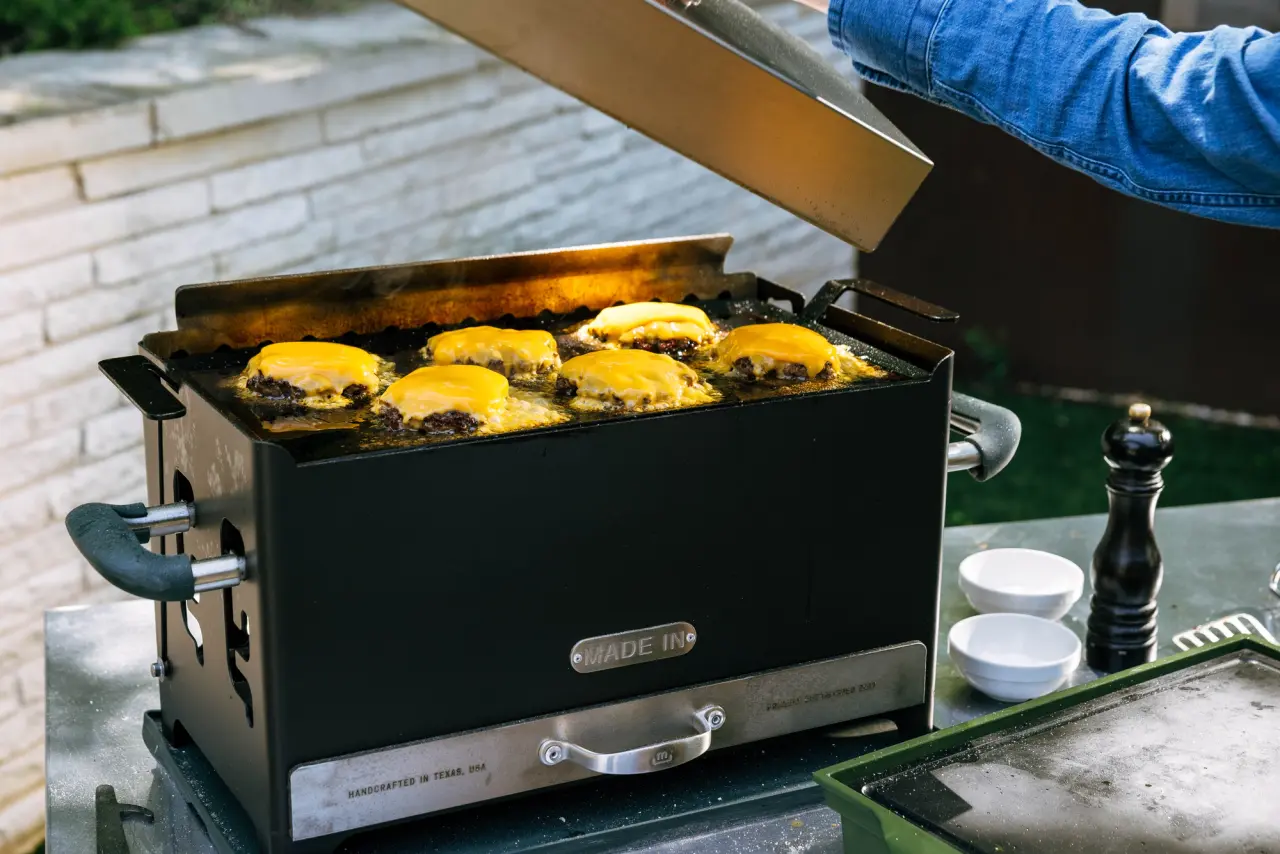
Not all griddles are equal. Match the material and size to your grill.
- Cast iron griddles: Heavy, superb heat retention, ideal for searing. Season well and avoid soap. Great on gas and charcoal. Can crack if shocked with cold water when blazing hot.
- Carbon steel plates: Lighter than cast iron, heats fast, seasons well. Many pros prefer it. Works on any grill and resists warping if thick.
- Stainless steel plates: Low maintenance, no seasoning needed. Heats fast but stores less heat. Good for quick cooks and seafood.
- Reversible grate inserts: Swap into your grill in place of grates. Perfect fit, easy storage, less surface area.
- Full-plate add-ons: Oversized plates that cover most of the grill. Great for crowds. Make sure there is a grease drain and room for airflow.
Best pairings:
- Gas grills: Simple, steady heat. Set one burner low for a cool zone and others high.
- Charcoal grills: Use a two-zone fire. Hot coals under one side, no coals under the other.
- Pellet grills: Even heat and smoke. Use higher temps for crisp edges.
- Kamado grills: Use with the lid cracked or slightly open to keep airflow. Watch grease and temps.

Safety, Airflow, and Setup Essentials
Safety comes first. A griddle blocks some airflow. If you block all of it, the fire can choke or surge. Leave some grate area open, or space the plate so air can move.
Grease is the next risk. Use a plate with a grease channel and pan. Keep the pan clear. Avoid letting oil pool near the hottest zone. Excess oil plus hot coals can flash.
Useful tools:
- Infrared thermometer for quick surface temp checks
- High-temp gloves and a wide spatula
- Rigid scraper and squeeze bottle for oil and water
- Grill-leveling wedges so the grease flows to the drain
From my own cooks, I learned this the hard way. Once, a full-plate add-on smothered my charcoal fire. I lifted a corner with a small spacer and the fire came back to life. Small airflow changes make a big difference.
:max_bytes(150000):strip_icc()/weber-rust-resistent-griddle-insert-grace-kelly-01-152bdae5417541e7a61817f50c6fd68d.jpg)
Step-by-Step: Setting a Griddle on Gas or Charcoal
Follow these steps for a safe and steady setup.
- Place and level
- Set the griddle on clean grates. Center it. Tilt it slightly toward the grease channel if it has one.
- Preheat gently
- Gas grill: Start with medium heat for 5 to 8 minutes, then raise to target.
- Charcoal grill: Build a two-zone fire. Bank coals to one side. Preheat 8 to 12 minutes.
- Check the surface
- Use an infrared thermometer. Aim for 375 to 425°F for most foods. Go hotter for smash burgers.
- Oil and season
- Wipe a thin film of high-smoke oil. Let it shimmer. You can add a light re-season if needed.
- Cook with zones
- Keep a hot zone for sear and a cooler zone for holding. Move food as needed.
- Manage grease
- Use the grease channel and pan. Wipe with a scraper between batches.
- Cool down right
- Turn off burners or close vents to slow the fire. Let the plate cool before cleaning.

Heat Management and Temperature Targets
Great flat-top cooking is all about heat control. These ranges work well on most plates:
- Smash burgers: 425 to 500°F. Fast Maillard browning and edge crisp.
- Pancakes and eggs: 350 to 375°F. Even browning without burning.
- Bacon: 375 to 400°F. Render fat and crisp without scorching.
- Fajitas and stir-fry: 425°F plus. Quick sear, tender veg.
- Seafood like scallops: 425°F. One to two minutes per side for a golden crust.
Wind and cold weather sap heat. On blustery days, I shielded my grill with a windbreak and let it preheat longer. A heavy plate helps hold heat steady when the lid is open.
Food safety matters. Follow standard guidance for doneness. Poultry should reach 165°F. Pork and ground meats should reach safe temps. Use a digital probe for thick cuts.
Food Ideas That Shine on a Griddle
A griddle on a grill opens a menu that is hard to do on open grates.
- Diner breakfast: Pancakes, eggs, bacon, and hash browns in one place.
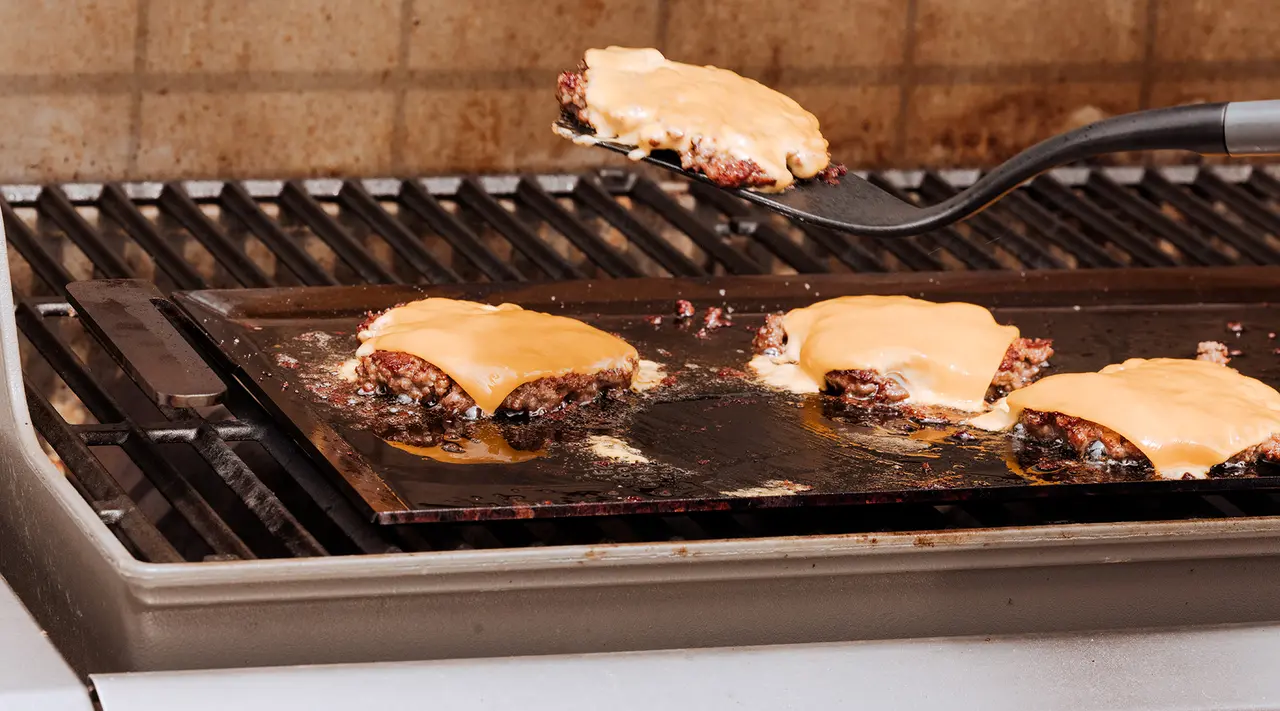
- Smash burgers: Quick crust, juicy centers, onions caramelized in the beef fat.
- Philly-style cheesesteaks: Thin-sliced beef, peppers, onions, cheese, toasted rolls.
- Shrimp and scallops: No more falling through grates, fast sear, clean edges.
- Veggie stir-fry: Snap peas, peppers, mushrooms, soy or teriyaki glaze.
- Street tacos: Sear marinated meats, warm tortillas on the edge, pile on cilantro.
One of my best cooks was a backyard brunch. I cooked bacon first, saved some fat, and used it to crisp hash browns. The crowd went silent. That is the power of a hot, flat surface.

Cleaning, Seasoning, and Storage
Clean while warm. Use a scraper to remove bits. Add a splash of warm water to steam off residue. Wipe dry with paper towels.
For cast iron or carbon steel, add a thin coat of high-smoke oil while warm. This protects and builds seasoning. Skip heavy soap. For stainless steel, you can use mild soap and a non-scratch pad.
Store dry, with a light oil coat if it is iron or carbon steel. Keep it out of the rain. If rust appears, scrub it off, dry, and re-season. I once rescued a rusty plate with steel wool, three thin oil coats, and a careful bake. It looked new after one cook.
Common Mistakes and How to Avoid Them
- Blocking airflow completely: Leave a gap or an open grate area so the fire breathes.
- Thermal shock: Do not pour cold water on a screaming-hot plate. Let it cool a bit first.
- Grease pooling: Use the channel and drain pan. Keep the surface level or slightly sloped.
- Overheating thin plates: Very thin plates can warp. Preheat in stages and avoid extreme blasts.
- Skipping preheat: A cold griddle sticks. Heat it until oil shimmers before cooking.
Troubleshooting: Warping, Hot Spots, Sticking, Smoke
Warping
- Use thicker plates for high heat. Preheat slowly. Do not crank burners to max at once.
Hot spots
- Rotate the plate during preheat. On gas grills, balance burners. On charcoal, spread coals even.
Sticking
- Clean residue. Preheat until water beads and dances. Add a thin oil film before food.
Too much smoke
- Use high-smoke oils. Reduce excess fat. Lower heat until smoke thins, then ramp up again.
Grease flare
- Move food to a cooler zone. Scrape and clear the channel. Keep a spray bottle of water for minor flare edges.
Alternatives and Add-Ons: Inserts vs Standalone Flat-Tops
You have choices beyond a loose plate. Many grills sell custom griddle inserts that drop in for a tight fit. They are stable, drain well, and maintain airflow. They are a simple answer to can you put a griddle on a grill without fuss.
Standalone flat-top cookers have more surface area and wind guards. They are great for big groups. But if space or budget is tight, a good plate on your existing grill cooks 90 percent of the same food. Add wind baffles, a grease can, and a solid spatula set to close the gap even more.
Quick Answers to Popular Questions
Can you put a griddle on a grill with the lid closed?
- Yes, but watch temps and airflow. I keep the lid slightly open to prevent grease smoke from getting trapped and turning bitter.
Can you put a griddle on a grill and still get smoke flavor?
- Yes. On charcoal or pellet grills, smoke flows around the plate. Use wood chunks or pellets for a light kiss of smoke.
Can you put a griddle on a grill if it covers the whole grate?
- You can, but leave side gaps or prop the plate with spacers. Fire needs air, and grease needs a clear path to a drain.
Frequently Asked Questions of can you put a griddle on a grill
Do I need to season a new griddle before first use?
Yes, if it is cast iron or carbon steel. Apply a thin oil coat and heat it until the oil bonds and darkens.
Will a griddle damage my grill grates?
No, not if it fits well and you preheat in stages. Avoid dropping a heavy plate onto porcelain-coated grates.
What oil should I use on a griddle?
Use high-smoke oils like canola, avocado, or refined peanut. Save butter for finishing so it does not burn.
Can you put a griddle on a grill and cook steak well?
Yes. Sear at 450 to 500°F for a deep crust, then rest. For thick cuts, sear then move to a cooler zone to finish.
How do I stop food from tasting smoky or bitter?
Use clean fuel and manage grease. Keep temps in range, avoid stale smoke buildup, and clean the plate between batches.
Will this work on a small portable grill?
Yes, with a smaller plate and mindful airflow. Preheat longer and cook in batches.
Can you put a griddle on a grill in winter?
Yes. Shield from wind, preheat longer, and use a thicker plate. Fuel use will rise in cold air.
Conclusion
You asked, can you put a griddle on a grill, and the answer is a clear yes. With the right plate, smart airflow, and simple grease control, you get a flat-top’s speed and sear right on your backyard rig. The cook space stays tidy, and your food hits that sweet spot of crisp outside and juicy inside.
Start small this week. Try smash burgers or a breakfast run on your current grill. Share your results, ask questions, and tell me what you want to cook next. If this helped, subscribe or leave a comment so we can keep cooking better, together.

Hi, I’m Mary, the founder of KitchenClue.com. I’m deeply passionate about everything that makes a kitchen smarter, easier, and more enjoyable. I share hands-on insights and practical expertise on kitchen gear that truly helps in daily cooking. Along with my dedicated research team, we study products carefully, and our writers create honest, well-tested reviews using trusted, authentic sources—so you can choose kitchen tools with total confidence.