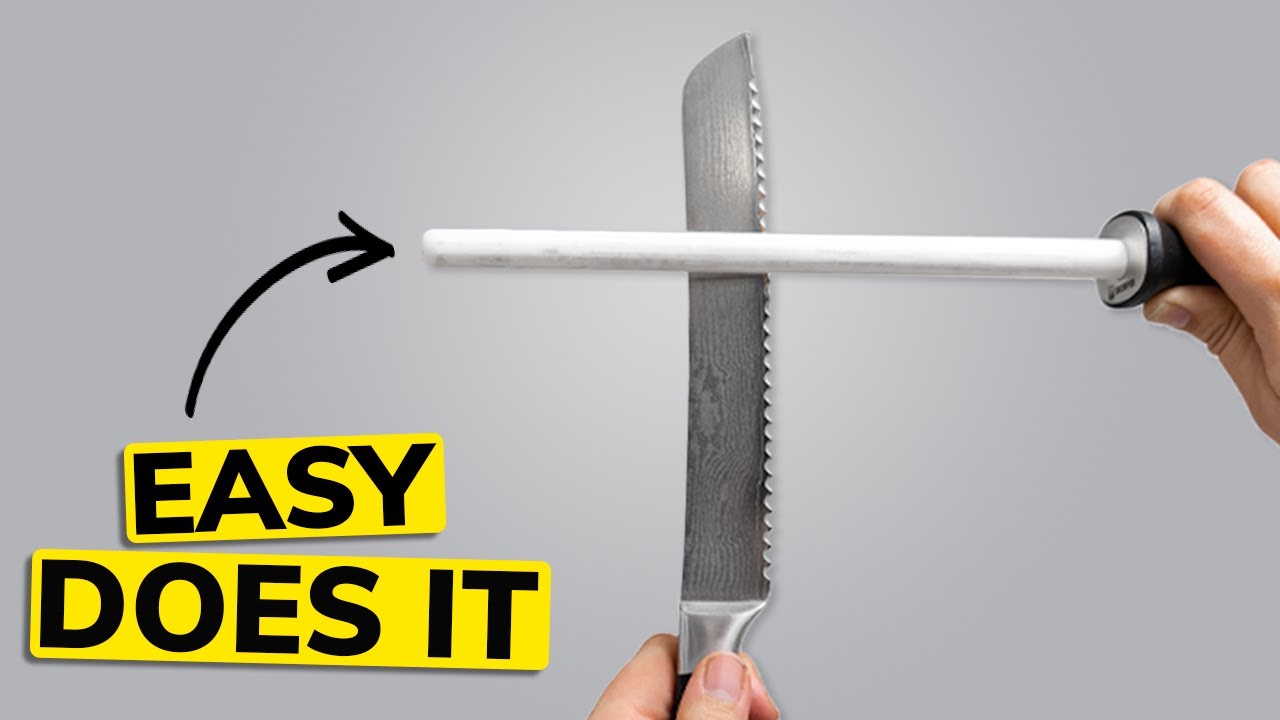
Can You Sharpen A Bread Knife: Expert Guide 2026
Yes, you can sharpen a bread knife with the right rod and technique.
If you’ve paused mid-slice and asked, can you sharpen a bread knife, you’re in the right place. I’ve sharpened dozens of serrated blades in pro kitchens and home shops. Here, I’ll show you how it works, what tools to use, when to call a pro, and how to keep your knife biting cleanly through crust and tomatoes. Read on for a clear, friendly guide that answers can you sharpen a bread knife with depth and real-world tips.
What makes a bread knife different (and why it dulls)
Serrated bread knives use a row of pointed teeth and scallops. The points grab the crust. The scallops do the cut. Over time, those inner curves get smooth. The bite fades.
Some people say you cannot sharpen serrations. That is a myth. You can sharpen them one scallop at a time. The key is the right tool and a light touch. So, can you sharpen a bread knife? Yes. Should you? Often, yes, if the blade is decent.
In my test kitchen, I revived a cheap bakery knife in 12 minutes. The teeth came back to life, and it sliced warm sourdough with no crush. If you ask can you sharpen a bread knife at home, the answer is still yes, with care.

Methods: How to sharpen a serrated bread knife
You have a few solid options. Pick based on skill, time, and the knife’s value.
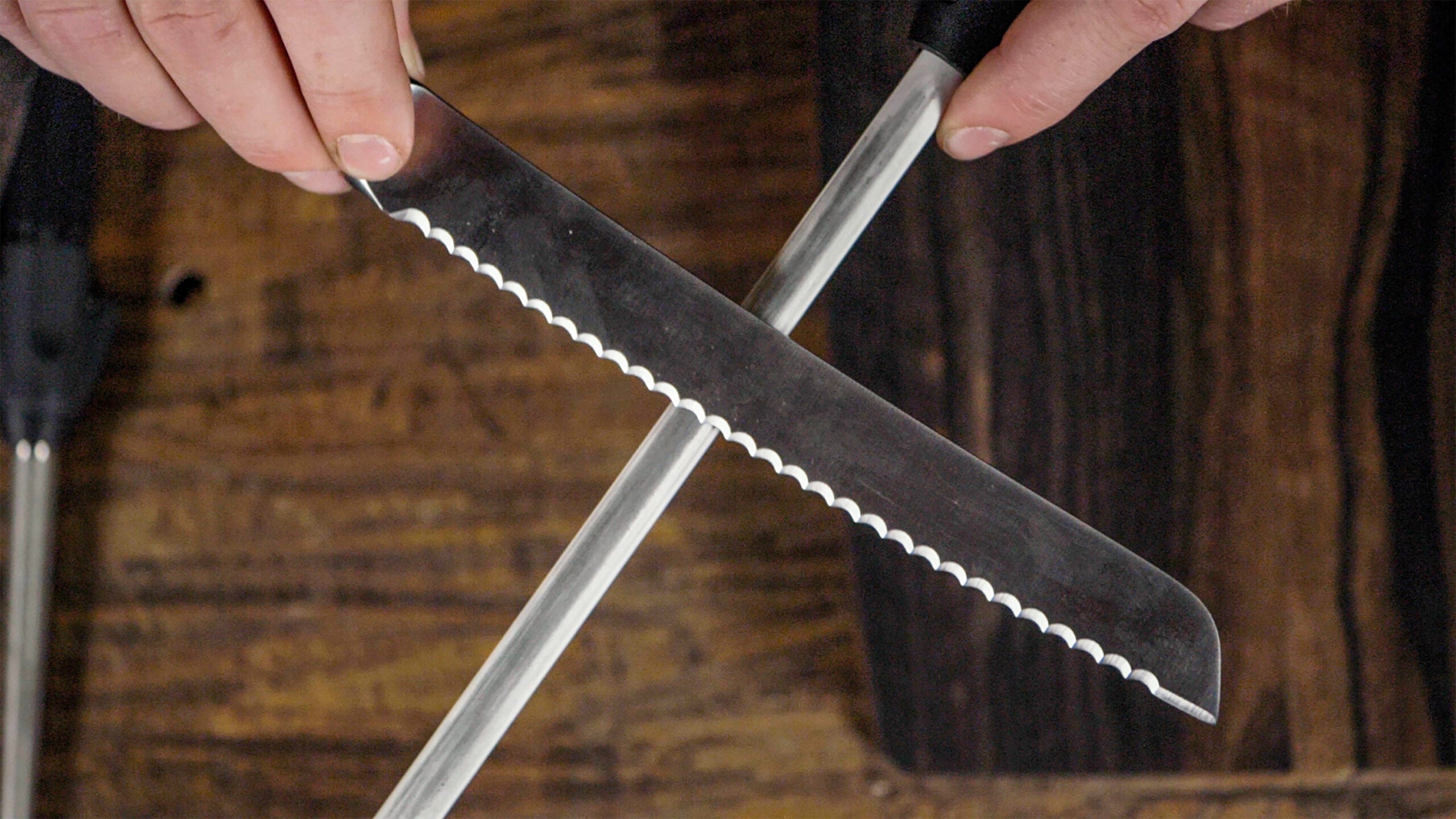
- Tapered ceramic or diamond rod. Match the rod size to each scallop. Work from the beveled side only.
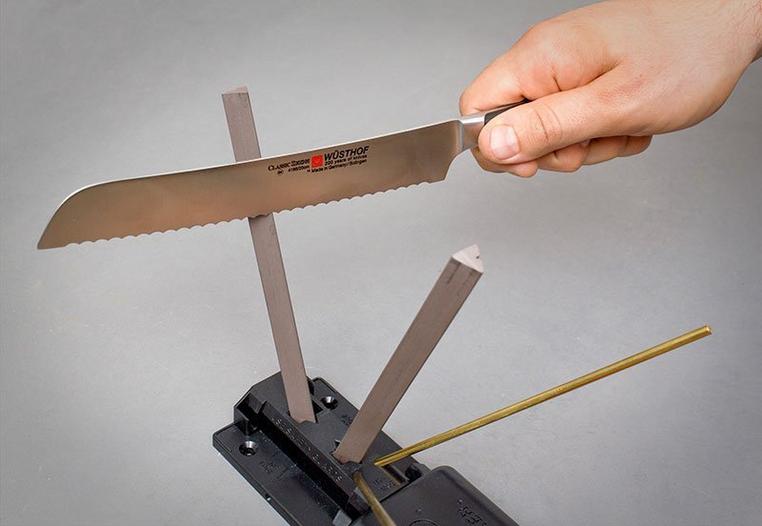
- Specialty serrated sharpeners. These have stepped diameters. They are fast and easy for mixed tooth sizes.
- Professional service. Good shops re-profile teeth and polish gullets. This is best for pricey knives.
- Guided systems with small round stones. Great control, but slower.
- Flat whetstone or strop. Use only to deburr the flat side after rod work. Do not grind the flat side.
Angles vary. Many bread knives have a single bevel on one side around 20–25 degrees. Some fine knives run closer to 15–20 degrees. Check the factory bevel and follow it. Avoid pull-through V sharpeners. They can round the teeth and ruin the pattern.
Can you sharpen a bread knife with a rod and keep the teeth sharp? Yes. Go slow. Use fine grit (800–1200 for diamond, fine ceramic). Light pressure wins.

Step-by-step: Sharpen a bread knife at home
Follow this simple path. It is safe and repeatable.
- Inspect the edge. Find the beveled (chisel) side. The other side is flat.
- Mark the bevel with a felt marker. This shows contact and helps your angle.
- Pick a tapered rod that fits the scallop. The rod should fill most of the curve.
- Hold the knife steady. Set the rod to match the bevel angle.
- Stroke inside the scallop from heel to tip. Use short, smooth pulls. Two to four light strokes per scallop.
- Feel for a small burr on the flat side. That tells you the scallop is sharp.
- Deburr the flat side. Make one or two very light passes on a fine stone or strop. Keep the blade flat.
- Wipe clean. Test on a tomato or a sheet of paper. It should bite and glide.
- Repeat if needed. Less is more. Do not over-grind.
Safety tips:
- Work slowly and keep fingers behind the edge.
- Clamp the knife or rest it on a folded towel.
- Clean and dry the rod and blade after sharpening.
How often can you sharpen a bread knife like this? For home use, once or twice a year is common. Heavy bakery use may need touch-ups each month.

When to sharpen, replace, or call a pro
Not every knife is worth the time. Here is a quick filter.
- Send to a pro if teeth are bent, chipped, or uneven.
- Replace if the knife is very cheap and very worn. The cost may be the same as a pro job.
- DIY if the edge is dull but the teeth look even.
Pros often use fine belts or small round hones. They restore the gullets and tips. The tooth pattern stays true. If you wonder, can you sharpen a bread knife to “like new,” a good pro often can.
A simple rule: If the knife cost more than the service, sharpen it. If not, consider a new one.
?%24center=center&%24poi=poi&%24product-image%24=&fmt=auto&poi=%7B%24this.metadata.pointOfInterest.x%7D%2C%7B%24this.metadata.pointOfInterest.y%7D%2C%7B%24this.metadata.pointOfInterest.w%7D%2C%7B%24this.metadata.pointOfInterest.h%7D&scaleFit=%7B%28%24this.metadata.pointOfInterest%29%3F%24poi%3A%24center%7D&sm=c&w=762)
Care tips to keep your bread knife sharp longer
You can stretch the time between sharpenings with small habits.
- Use wood or plastic boards. Avoid glass, marble, and ceramic.
- Hand wash and dry at once. Skip the dishwasher.
- Store in a sheath, block, or on a magnetic strip.
- Use a gentle sawing motion. Let the teeth bite. Do not press hard.
- Keep it for bread, tomatoes, cakes, and citrus. Avoid bones and frozen food.
A quick strop on leather (flat side only) after baking day can keep the bite fresh. Do this in seconds. Then you will ask can you sharpen a bread knife less often.

Safety, common mistakes, and sharpness tests
These errors dull knives fast. Avoid them and you will be set.
- Using a pull-through V sharpener. It rounds teeth and kills performance.
- Grinding the flat side. That thins the teeth and weakens the edge.
- Using a rod that is too big or too small. It changes the scallop shape.
- Pressing too hard or using very coarse grit. Fine grit and light touch work best.
- Skipping the deburr step. Burrs snag and feel dull on food.
How to test sharpness:
- Paper test. It should start the cut with a light touch and saw cleanly.
- Tomato test. It should grab the skin with no crush.
- Crusty loaf test. It should slice with few crumbs and low pressure.
If you still ask, can you sharpen a bread knife to pro level at home, the answer is yes with practice and the right rod.
Frequently Asked Questions of can you sharpen a bread knife
How often should I sharpen a bread knife?
For most homes, once or twice a year is enough. If you bake often, plan light touch-ups every few months.
Can you sharpen a bread knife with a whetstone only?
No, not well. Use a tapered rod for the scallops, then a fine stone or strop to deburr the flat side.
Is it worth paying a professional to sharpen a bread knife?
Yes, for high-end knives or damaged teeth. A pro can restore the tooth pattern and extend the knife’s life.
Will sharpening change the serrations?
Done right, only a tiny bit. Match the rod size to each scallop to keep the shape.
Can I use an electric sharpener on a serrated bread knife?
Most electric V sharpeners are not made for serrations. Use a rod or a pro service designed for serrated blades.
What angle should I use on a bread knife?
Match the factory bevel, often 20–25 degrees on the beveled side. If unsure, color the bevel with a marker and adjust until you remove ink evenly.
How do I know which side to sharpen?
Look for the chisel side with the visible bevel in the scallops. Sharpen that side only, then lightly deburr the flat side.
Conclusion
You now know the full story behind can you sharpen a bread knife. With a tapered rod, a light touch, and a short routine, you can bring back clean, easy cuts without buying a new blade. Start with one knife, take your time, and you will see quick wins.
Ready to try? Grab a rod, mark the bevel, and sharpen three scallops today. Share your results, drop your questions in the comments, and subscribe for more hands-on kitchen gear guides.

Hi, I’m Mary, the founder of KitchenClue.com. I’m deeply passionate about everything that makes a kitchen smarter, easier, and more enjoyable. I share hands-on insights and practical expertise on kitchen gear that truly helps in daily cooking. Along with my dedicated research team, we study products carefully, and our writers create honest, well-tested reviews using trusted, authentic sources—so you can choose kitchen tools with total confidence.