Can Any Pot Go In The Oven: Safe Materials And Tips
No—can any pot go in the oven? Only some pots are truly oven-safe.
If you have ever asked can any pot go in the oven, you are not alone. I test cookware for a living, and I see the same mistakes. This guide explains what oven-safe means, which pots work, and what to avoid. You will walk away with clear rules you can use today.

Can any pot go in the oven? What oven-safe really means
Can any pot go in the oven is a fair question because not all cookware is built the same. Oven-safe means the body, handles, lid, and coatings can handle set heat for a set time. One weak part can fail and ruin dinner. That is why the answer is no for some pots, and yes for others.
Here is the core idea. The pot’s material sets the base limit. The handle and lid set the real limit. Always check both. If you still ask can any pot go in the oven after this, keep reading. You will know how to check and use yours with ease.
Materials that work—and those that do not
Not all metals or coatings act the same in heat. Use this simple guide before you slide a pot into a hot oven.
Cast iron
Bare cast iron is very heat hardy. It is safe for most home ovens, even at high heat. Season it well and avoid quick shocks with cold water.
Enameled cast iron
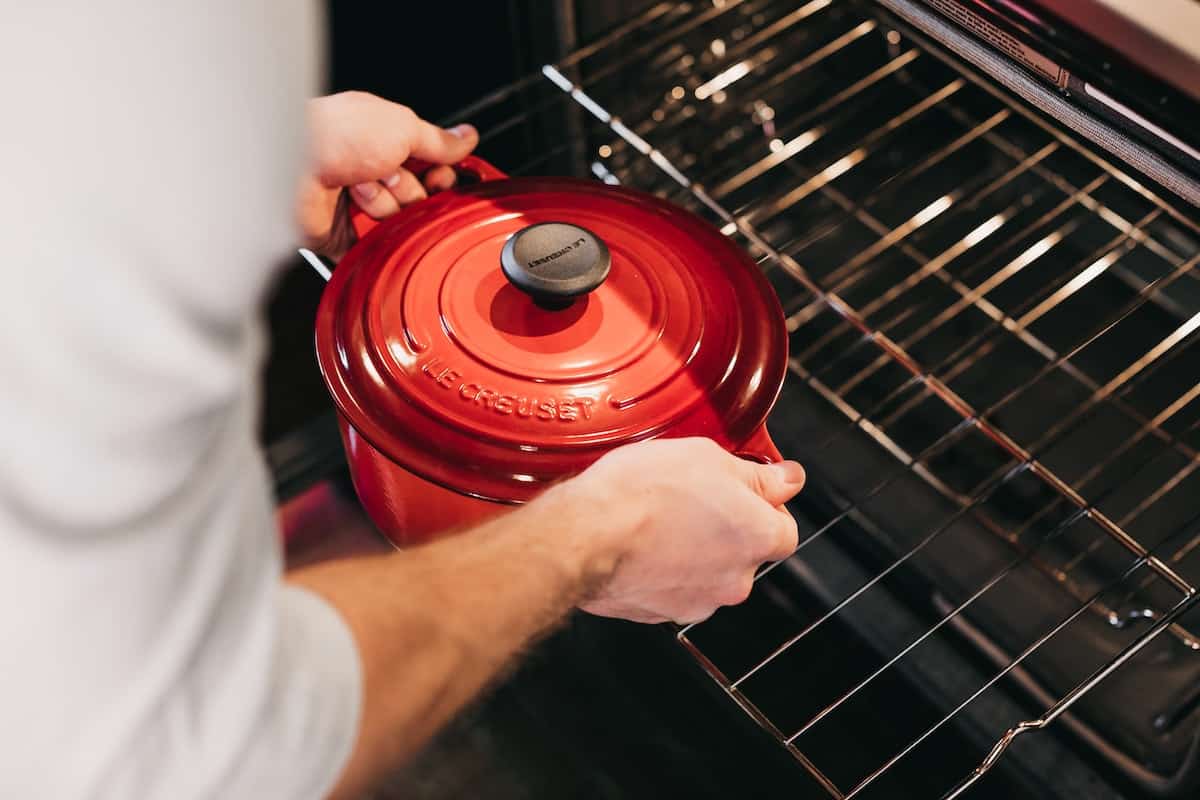
Enameled Dutch ovens are ideal for braises and bread. Most models rate up to 450–500°F. Some lids or knobs cap at 400°F. Check the manual.
Stainless steel
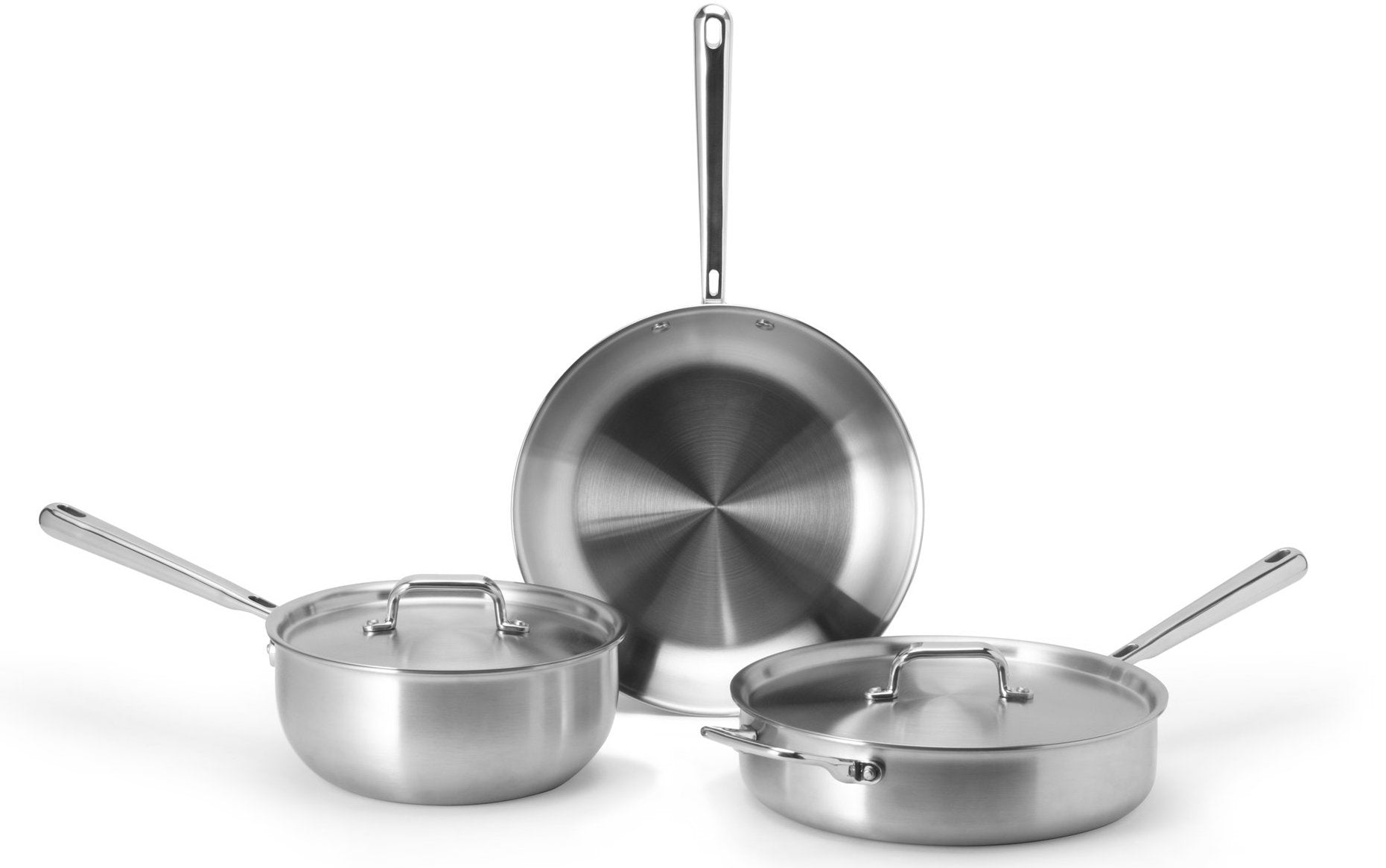
Most fully clad stainless steel pots are safe up to 500–600°F. If they have plastic or wood handles, that number drops fast. Stainless is great for sear-then-bake.
Hard-anodized aluminum
These are common and often nonstick. Many rate between 400–500°F. Avoid the broiler with nonstick. PTFE can degrade above 500°F.
Copper
Bare copper is rare for pots. Most copper cookware has a lining and attached handles. Oven safety depends on those parts. Many are fine to 450–500°F.
Carbon steel
Sturdy and simple. Often safe beyond 600°F. Season and avoid sudden shocks.
Ceramic and glass pots
They bake well but can crack with thermal shock. Many rate up to 450°F. Avoid broilers and large temp swings.
Stoneware and earthenware
Great for low, slow heat. Avoid high heat and fast changes. Follow the maker’s prep steps.
Nonstick coatings (PTFE or ceramic)
Most nonstick pots are safe only to 400–450°F. Never use under a broiler. High heat shortens life and can release fumes.
If you wonder can any pot go in the oven, think material first, but never stop there. Handles and lids can change the whole answer.

Handles, lids, and coatings: the hidden deal-breakers
Even if the pot body is tough, small parts can fail.
Handles
Plastic or Bakelite handles often top out at 320–375°F. Silicone is better but still has limits around 400–428°F. Metal handles are best for the oven.
Lids and knobs
Glass lids often cap at 350–400°F and hate broilers. Phenolic knobs can melt or warp. Metal lids are safest. If a knob is the weak link, you can remove it for high-heat baking on some models.
Coatings and trims
Paint, decals, and adhesive pads can smoke or peel. Induction plates attached with adhesive may loosen at very high heat. When in doubt, skip the oven or lower the temp.
Ask yourself again: can any pot go in the oven? Yes, if every piece of it can handle the heat.

Temperature and broiler limits you should know
Home ovens vary, but the rules below hold up in tests.
- 350–400°F: Safe zone for most cookware, even with silicone parts.
- 400–450°F: Check limits. Many nonstick and glass lids top out here.
- 450–500°F: Cast iron, enameled cast iron, stainless, and carbon steel often excel here.
- 500°F+ and broiler: Use bare cast iron or carbon steel. Most nonstick and glass lids are not safe.
Broilers are harsh. Radiant heat can spike past the set number. Handles near the flame can scorch. When you ask can any pot go in the oven under a broiler, the safe answer is almost always no unless it is full metal and rated.
How to check if your pot is oven-safe
Use this fast, reliable process before you cook.
- Look for an oven-safe stamp on the bottom or handle. Many brands print max temps.
- Check the manual or the brand site. Search the exact model number.
- Inspect handles and knobs. If they are plastic, wood, or cork, skip the oven.
- Verify lid limits. Glass lids often have lower ratings than the pot.
- Note the coating. Nonstick rarely likes heat above 450°F or any broiler time.
- Test with a low-risk bake. Start at 350°F for 20 minutes. Watch for smell, smoke, or soft handles.
When a reader asks me, can any pot go in the oven, this checklist is my go-to.

Real-world lessons from my kitchen
I have learned these rules the hard way. Years ago, I slid a nonstick stockpot under a broiler to brown a mac and cheese top. The plastic handle drooped like a candle. The dish was fine; the pan was not.
A small win: I swapped a phenolic knob on an enameled Dutch oven with a metal one. That change took the lid from 400°F to 500°F safe use. If you still wonder can any pot go in the oven, remember that a small part often decides the fate.
One more tip: avoid sudden shocks. I cracked a ceramic pot by moving it from a hot oven to a cold stone counter. Set it on a dry towel or rack first.

Safe use guide: from stovetop to oven
Follow these steps for smooth, safe cooking.
- Preheat the oven. Do not start with a cold oven for glass, ceramic, or enamel.
- Use medium heat on the stove before you bake. Avoid blasting heat with nonstick.
- Remove weak lids or knobs if your model allows. Or keep temps within the lowest rating.
- Move hot pots to a dry towel or wooden board. This prevents thermal shock.
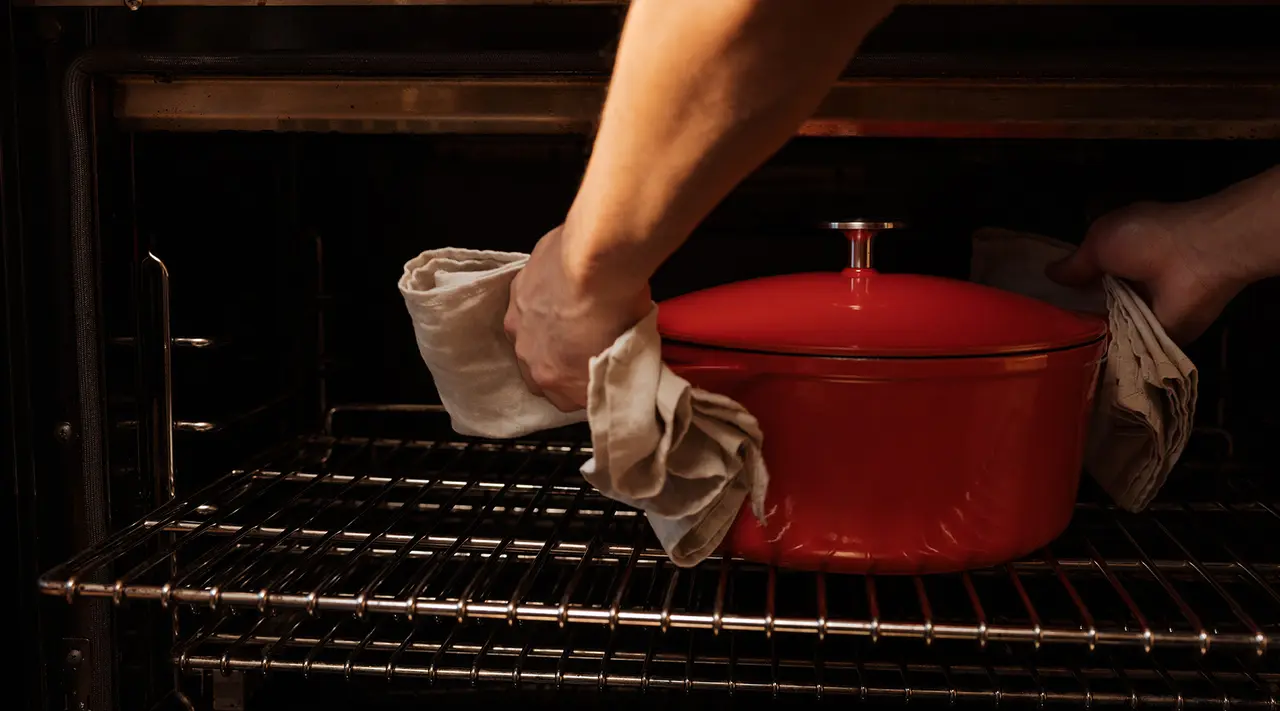
- Use dry oven mitts and two hands. Steam burns and slips are common.
- Clean with warm water after the pan cools. Avoid cold shocks and harsh scrubbers.
I still get messages asking can any pot go in the oven for braises or bread. With these steps, the right pot will serve you for years.

Brand snapshots and common ratings
Always confirm your exact model, but these are common ranges I see in testing and manuals.
- Le Creuset and Staub enameled cast iron: Usually 450–500°F. Some knobs 375–400°F unless upgraded.
- Lodge cast iron: Often safe for any home oven temp and broiler when bare.
- All-Clad stainless: Commonly 500–600°F. Lids may vary.
- Calphalon hard-anodized: Often 400–500°F. Nonstick and glass lids reduce limits.
- Cuisinart stainless and hard-anodized: Many at 400–500°F. Check lid specs.
- Tramontina enameled cast iron: Often up to 450–500°F, with knob caveats.
- IKEA cookware: Many at 400–500°F, but plastic parts change the story.
If you ask the blanket question can any pot go in the oven, brand and build details matter more than the logo alone.

Quick answers to common searches
Can any pot go in the oven for sourdough?
Use enameled or bare cast iron with a metal knob. Most nonstick or glass-lid pots are not ideal.
Can any pot go in the oven if it has silicone handles?
Often yes up to around 400–428°F. Keep handles away from the broiler.
Can any pot go in the oven right after simmering on the stove?
Yes, if oven-safe, but avoid thermal shock. Preheat the oven and move the pot with care.
Frequently Asked Questions of can any pot go in the oven
How can I tell if my pot is oven-safe without a manual?
Check for an oven-safe stamp and inspect all parts. When unsure, assume the lowest-rated part, like a handle, sets the limit.
Can I put a nonstick pot in the oven?
Many nonstick pots are safe to 400–450°F. Do not use them under a broiler or at very high heat.
Are glass lids safe in the oven?
Often up to 350–400°F. Avoid broilers and large temperature swings to prevent breakage.
Will a wooden handle survive the oven?
No. Wood dries, cracks, and can scorch. Choose full metal handles for oven use.
Is enamel safe for high heat?
Yes, within limits. Many enameled pots are fine to 450–500°F, but lids or knobs may lower the max.
Can I swap a knob to raise the oven limit?
Often yes. A metal replacement knob can make the lid match the pot’s higher rating.
Do induction bases affect oven safety?
They can if adhesive is used. High heat may loosen bonded plates, so follow the brand’s rating.
Conclusion
Not every pot belongs in a hot oven. The right call depends on the body, the handles, the lid, and the coating. When in doubt, the weakest part sets the limit.
Choose the right tool, confirm the rating, and cook with confidence. Try a simple braise or baked pasta using an oven-safe pot from your kitchen today. Have a question or a story to share? Drop a comment, subscribe for more kitchen guides, and keep learning with us.

Hi, I’m Mary, the founder of KitchenClue.com. I’m deeply passionate about everything that makes a kitchen smarter, easier, and more enjoyable. I share hands-on insights and practical expertise on kitchen gear that truly helps in daily cooking. Along with my dedicated research team, we study products carefully, and our writers create honest, well-tested reviews using trusted, authentic sources—so you can choose kitchen tools with total confidence.