Can You Use Metal Utensils On Stainless Steel Pans: Guide
Yes, you can use metal utensils on stainless steel pans, with care.
If you cook on stainless steel often, this is good news. I’ve used stainless pans in busy restaurant lines and home kitchens for years. In this guide, I’ll break down when metal is safe, when to skip it, how to prevent scratches, and how to keep your pans looking great. If you’re asking can you use metal utensils on stainless steel pans, you’ll get a clear, expert-backed answer here—plus practical tips you can trust.

How stainless steel surfaces work
Stainless steel is not a delicate coating. It is an alloy of iron, chromium, and often nickel. The chromium forms a thin, stable oxide layer that protects the surface. That layer is tough. Your metal spatula will not peel it off like a nonstick coating.
Scratches can happen, but they are usually shallow and only cosmetic. They will not make your pan unsafe or ruin searing. In fact, many pro kitchens use metal utensils on stainless daily because the surface can take it. When people ask can you use metal utensils on stainless steel pans, they are often worried about damage. The truth is, stainless is built to work hard and last.

When metal utensils are safe to use
Metal tools shine during high-heat cooking and when you need control. Use them in these cases:
- Searing steaks, chops, or fish. A thin metal spatula slides cleanly under the crust.
- Scraping fond. A flat metal turner helps you loosen browned bits for a great pan sauce.
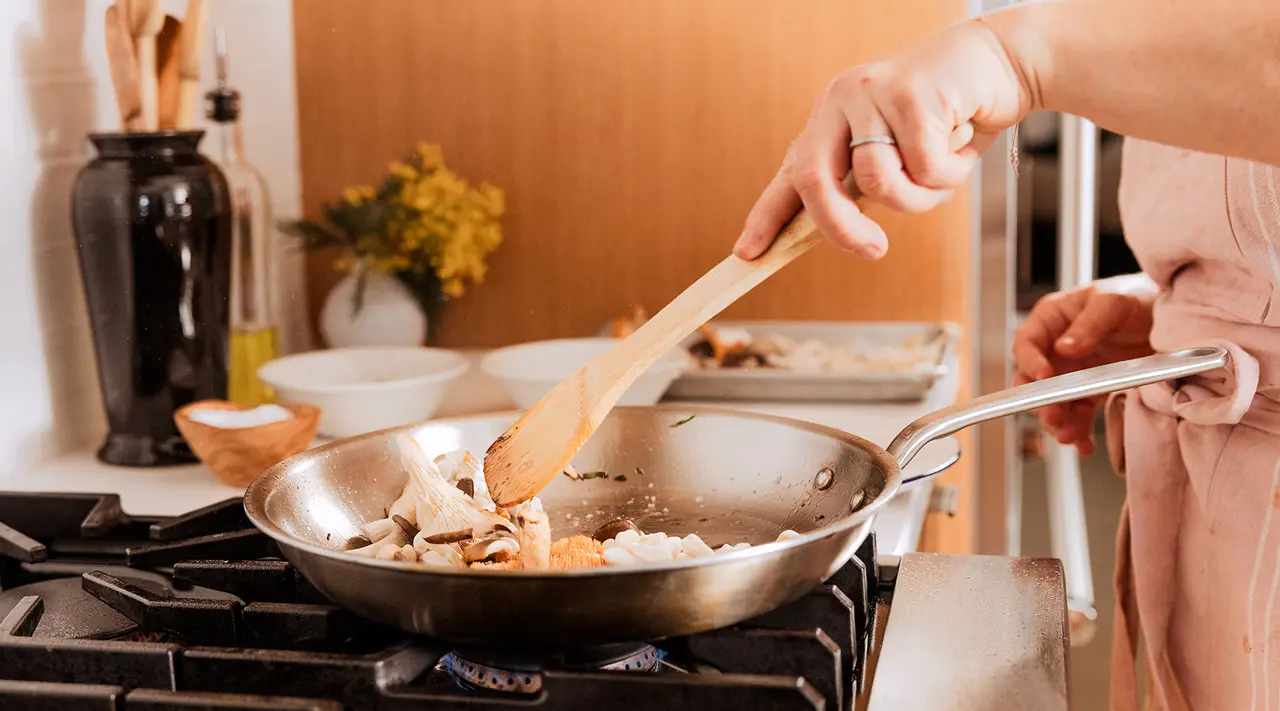
- Stir-frying or sautéing. Metal spoons and spatulas handle heat without melting.
- Roasting. Metal tongs and lifters move food with grip and precision.
- Deglazing. A metal tool helps release stuck-on bits after adding wine or stock.
Many top brands design stainless steel cookware for metal utensils. I often reach for a flexible fish spatula in a tri-ply skillet. It keeps control and leaves only faint trail marks. So, can you use metal utensils on stainless steel pans in daily cooking? Yes, and it often makes the job easier.

When you should avoid metal utensils
There are a few cases when metal is not ideal:
- If the stainless pan is lined with nonstick or ceramic. Check the product specs. If it says nonstick, skip metal.
- If your pan has a mirror-polished interior and you care about appearance. Metal may leave visible hairline scratches.
- If you use serrated knives or sharp blades in the pan. These can gouge or leave deep marks.
- If the pan is very thin and soft. Hard raking can deform thin walls or rims.
Read the manufacturer guide. Some hybrid “honeycomb” or textured stainless is made for metal. Others have a thin top layer that is not. If you wonder can you use metal utensils on stainless steel pans with special coatings, assume no unless the brand says yes.

How to minimize scratches if you use metal utensils
You can enjoy metal tools and keep your pans tidy with a few easy habits:
- Pick smooth edges. Use a thin, flat metal spatula with rounded corners.
- Glide, do not jab. Slide under the food; avoid hard chopping in the pan.
- Skip serrated tools. Use straight edges for scraping and turning.
- Preheat and use enough fat. Food releases better, so you do less scraping.
- Deglaze smart. Add liquid to loosen stuck bits, then scrape gently.
- Mix tools. Use silicone or wood for daily stirring, metal for flipping or scraping.
These small moves protect the surface while keeping performance high. When readers ask can you use metal utensils on stainless steel pans without ugly wear, these steps are my go-to answer.

Care, cleaning, and restoring the finish
Stainless steel is easy to maintain. Here is how to keep it clean and reduce marks:
- For day-to-day cleaning, use hot water, dish soap, and a soft sponge.
- For stuck-on food, simmer water in the pan for a few minutes. Then scrape gently and wash.
- To blend light scratches and remove stains, use a stainless cleaner with oxalic acid. Rub with the grain.
- Avoid steel wool. It can shed carbon steel bits that rust. Use non-scratch pads or stainless-safe scrubbers.
- To remove rainbow discoloration, wipe with warm vinegar, rinse, and dry.
- Dry the pan right away. Water spots fade, and the pan stays bright.
Regular care blends the patina so the surface looks even over time. And yes, you can still ask can you use metal utensils on stainless steel pans after a deep clean. The answer is still yes, as long as you use smooth-edged tools and good technique.

Common myths and facts
Myth: Metal utensils will ruin stainless steel.
Fact: Light scratches are normal and mostly cosmetic. Performance stays strong.Myth: Scratches make food stick.
Fact: Sticking is more about heat, oil, and food moisture than tiny scratches.Myth: Stainless needs seasoning like cast iron.
Fact: You can build a light patina, but it is optional. Technique matters more.Myth: You must avoid all abrasives.
Fact: Gentle abrasives and stainless-safe cleaners can restore the finish.Myth: Dishwasher is unsafe for stainless.
Fact: Most stainless is dishwasher safe, but hand washing keeps it prettier longer.
These points often settle the worry behind can you use metal utensils on stainless steel pans. The science of stainless supports real-world use.
Real kitchen lessons from years of use
In restaurant work, I kept a flexible metal fish spatula in my pocket. I used it to flip scallops and scrape fond from wide pans. Those pans saw heat and metal all night. They still looked good years later because we glided, we did not gouge.
At home, I learned to preheat, then add oil, then food. This simple order cuts sticking and heavy scraping. I also switched to rounded-edge tools. One time I used a serrated steak knife to cut chicken in the pan. That left a deep, visible mark. I never did that again. So when folks ask can you use metal utensils on stainless steel pans without regret, I say yes—just choose the right tool and use a light hand.

Frequently Asked Questions of can you use metal utensils on stainless steel pans
Will metal utensils scratch my stainless steel pan?
Light scratches can happen, but they are cosmetic. They do not affect safety or cooking performance.
Does using metal make food stick more?
No. Sticking relates to heat control, oil use, and food moisture. Proper preheating and deglazing help more than tool choice.
Can I use a metal whisk in a stainless pot or pan?
Yes, a smooth wire whisk is fine. Avoid whisks with sharp or damaged wires that can score the surface.
Are metal tongs safe for stainless steel?
Yes, metal tongs are great for searing and roasting. Choose tongs with smooth edges to avoid nicks.
What cleaners remove metal marks or discoloration?
Use a stainless-safe cleaner with oxalic acid. For rainbow tints, a warm vinegar wipe works well.
Should I avoid the dishwasher if I use metal tools?
Dishwashers are generally safe for stainless. Hand washing reduces spotting and keeps the finish nicer.
Can you use metal utensils on stainless steel pans with a mirror finish?
You can, but expect visible hairline scratches. If appearance matters, swap to silicone or wood for most tasks.
Conclusion
You can cook with confidence on stainless steel. Yes, you can use metal utensils on stainless steel pans, and with a few smart habits, your pans will stay tough, clean, and ready for daily use. Use smooth-edged tools, glide instead of gouge, and master preheating and deglazing.
Put these tips to work in your next sear or pan sauce. If this helped, share it with a friend, subscribe for more kitchen guides, or drop your questions in the comments. Happy cooking!

Hi, I’m Mary, the founder of KitchenClue.com. I’m deeply passionate about everything that makes a kitchen smarter, easier, and more enjoyable. I share hands-on insights and practical expertise on kitchen gear that truly helps in daily cooking. Along with my dedicated research team, we study products carefully, and our writers create honest, well-tested reviews using trusted, authentic sources—so you can choose kitchen tools with total confidence.